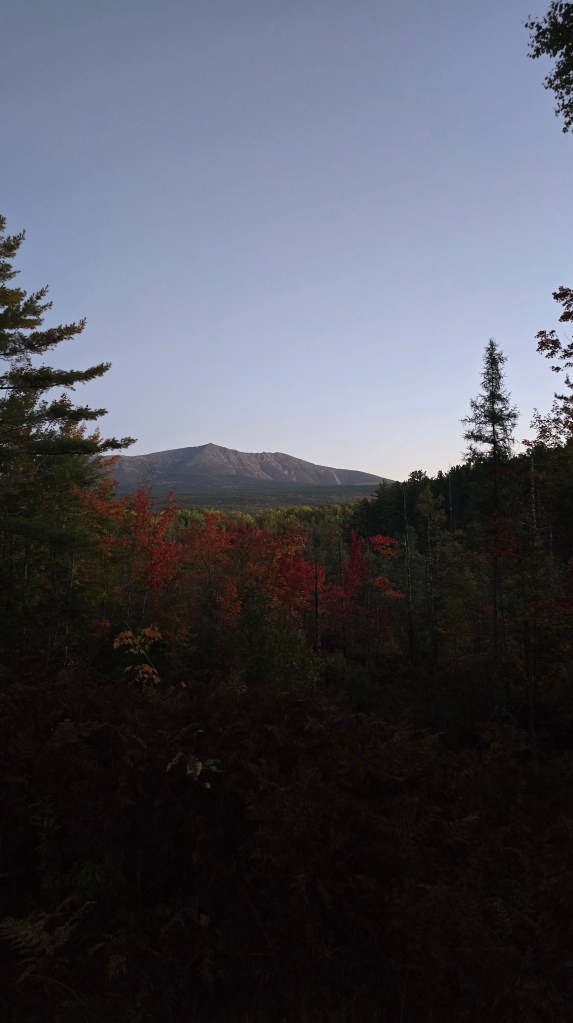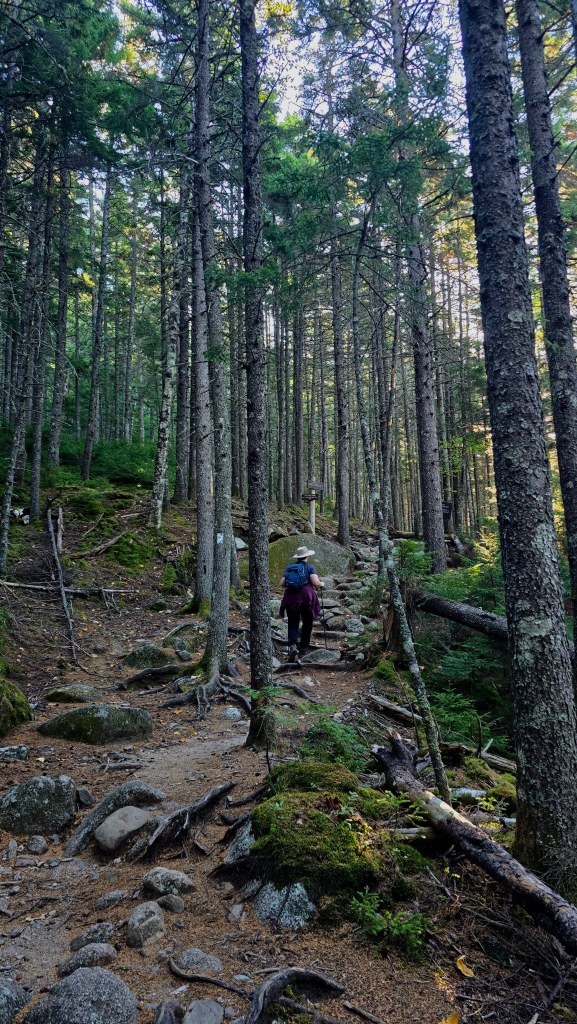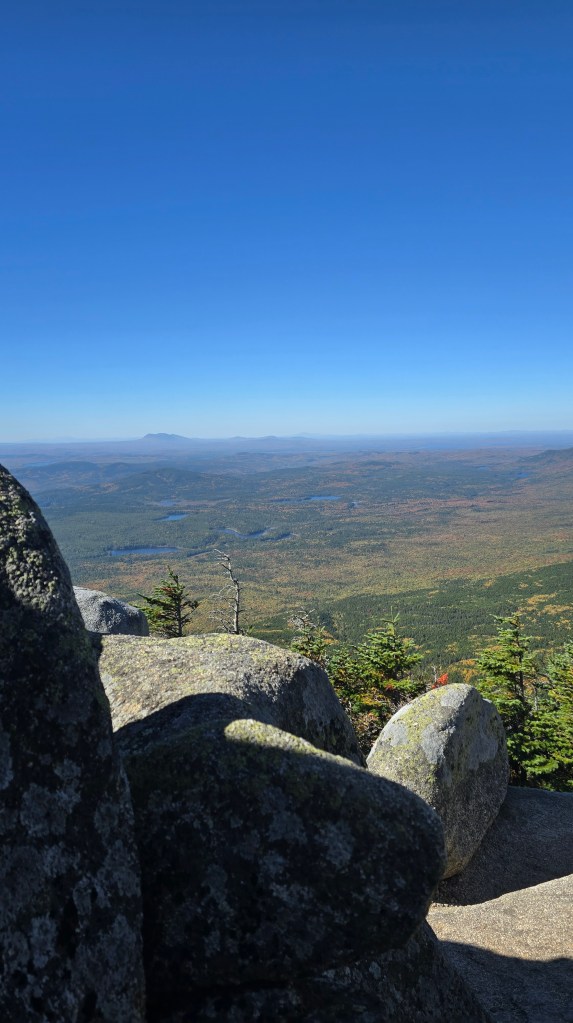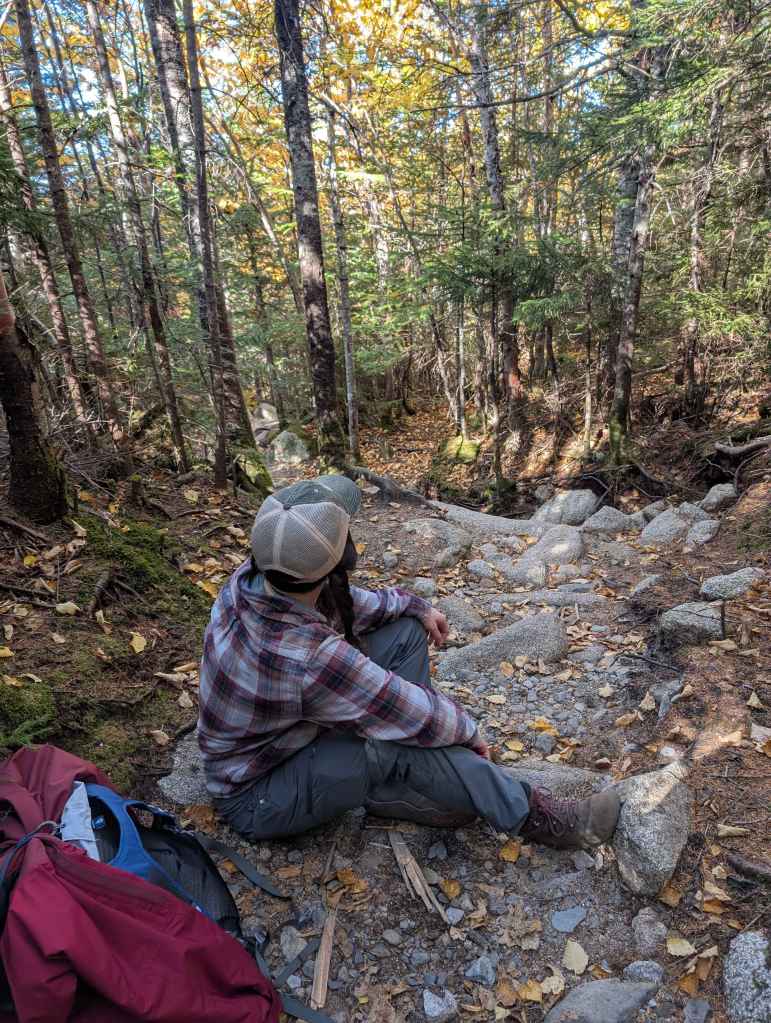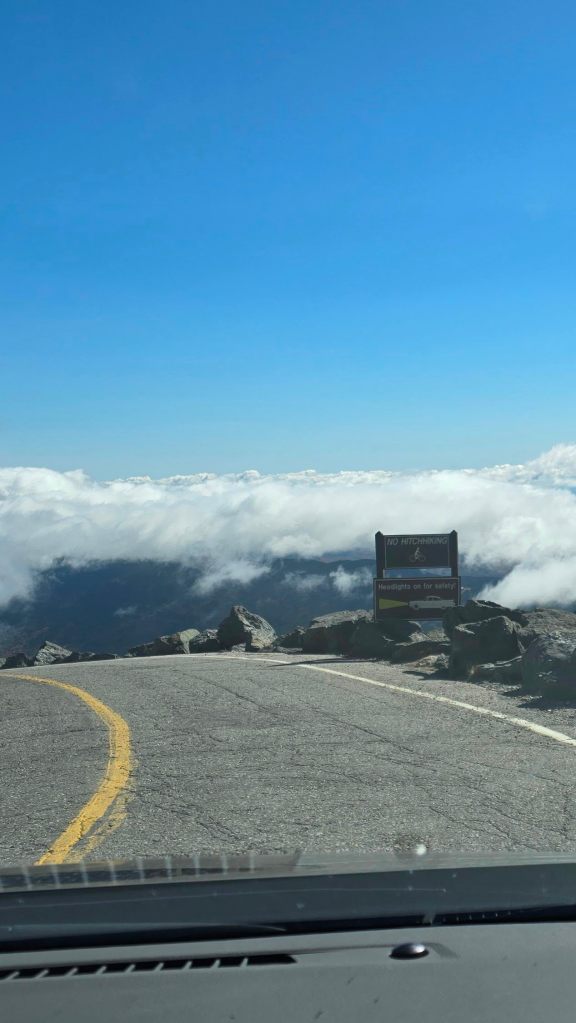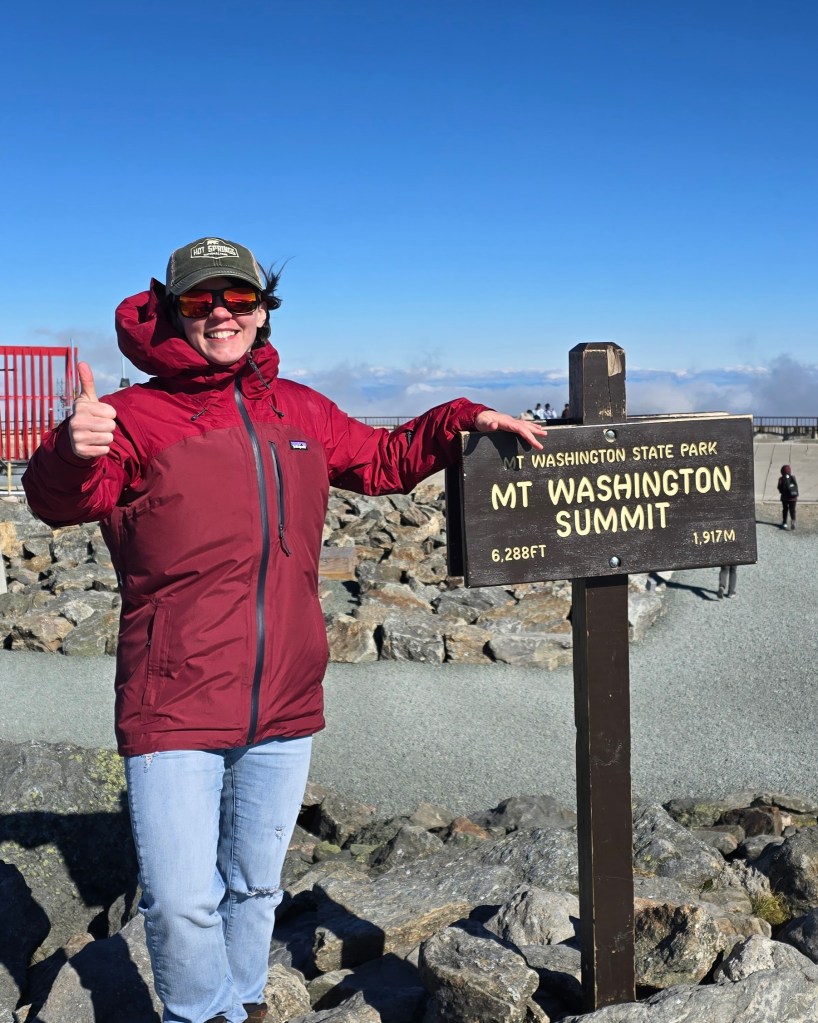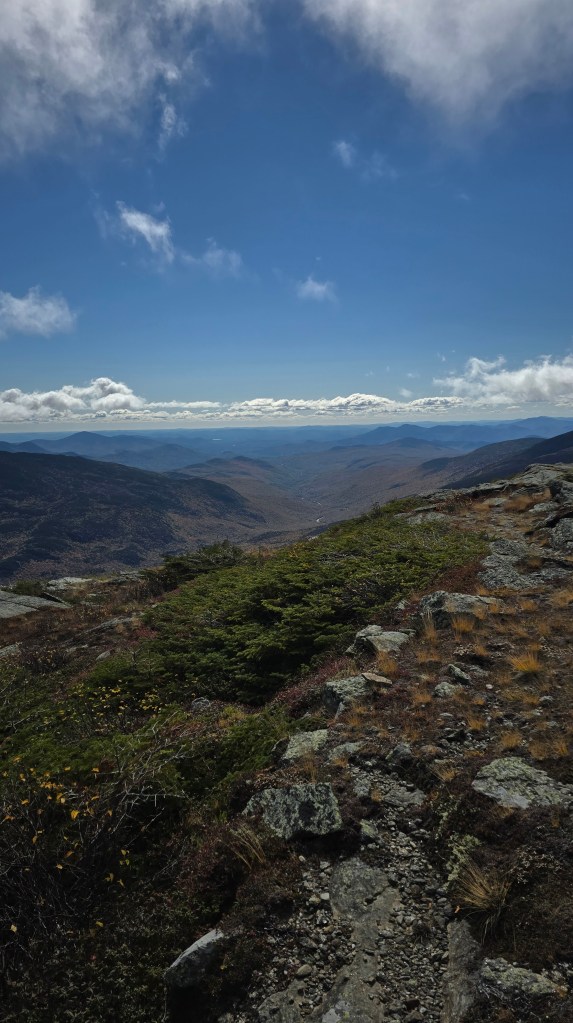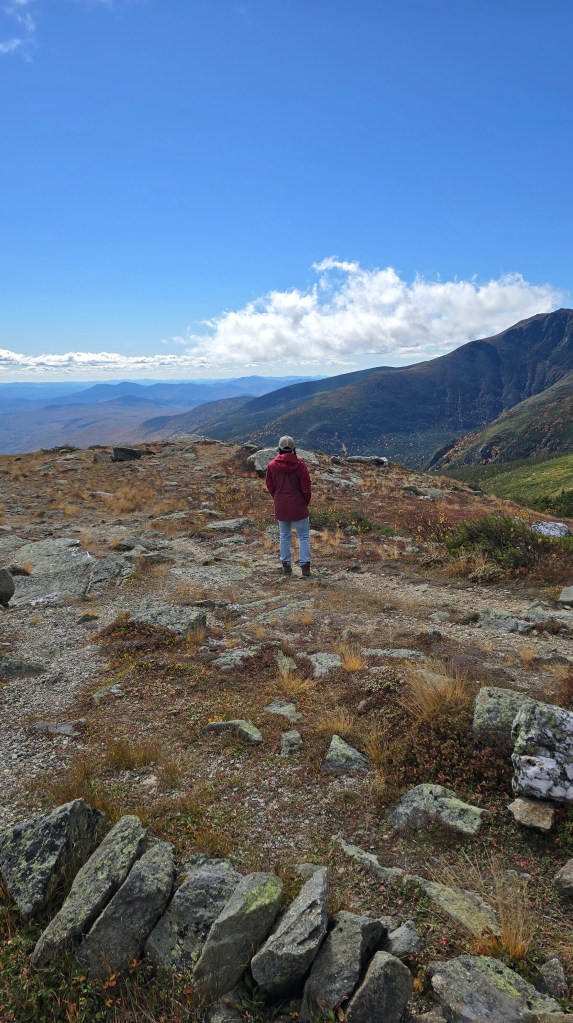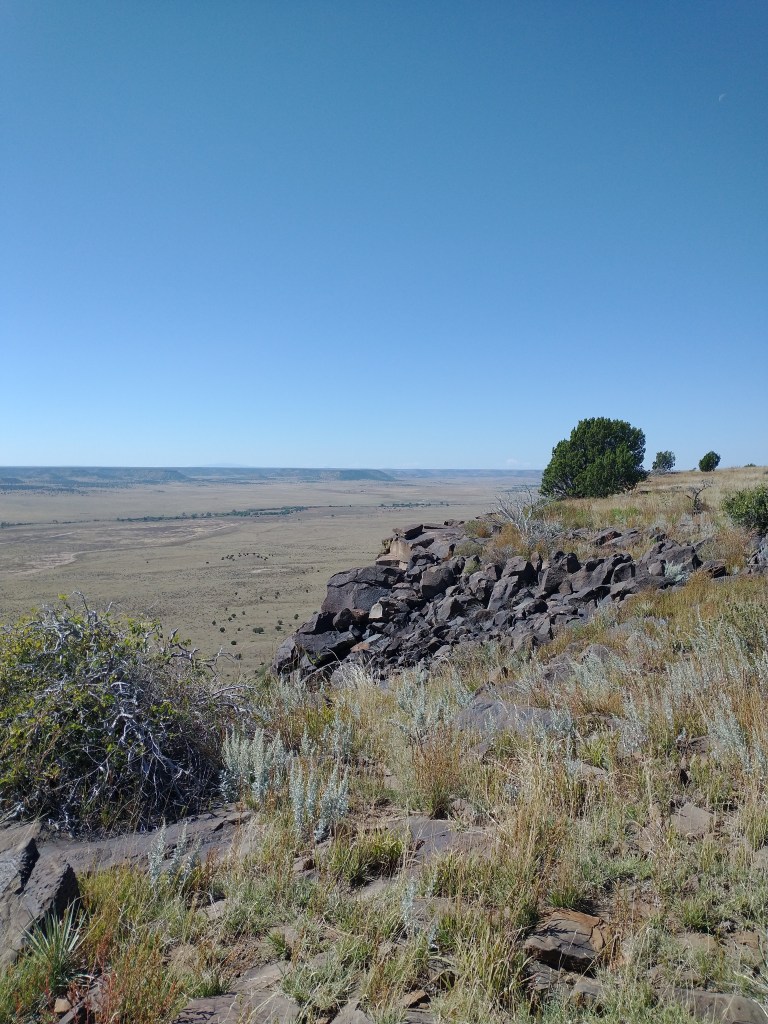
For better or worse, the fifth highpoint on the list is Black Mesa, a dry and unshaded hike through almost-desert and almost-prairie. It’s a landscape that reminds you aggressively of the far West Texas desert, despite being hundreds of miles away. But we’ll get into that.
Perhaps the most notable part of this trip: I brought friends! After all the time spent bellyaching about doing things alone on Greylock, it seems only fitting that on the next highpointing endeavor, no one would need to go it alone. Two of my best friends in the world agreed to roll out with me on this one, and as always, having them at my back made the sky seem a little bluer and the trail a little shorter after all. Thanks for coming, y’all.
That said, let’s hop in to covering the trip itself.
What’s Black Mesa?
Black Mesa is a miles-long plateau that extends through Colorado, New Mexico, and Oklahoma’s panhandle. The Oklahoma portion of the mesa includes the tallest point in the state of Oklahoma at 4,973 feet above sea level, beating several aspiring peaks in the Wichita Mountains in the southeastern part of the state.
Fun fact: The name comes from the volcanic rock spread over the area, like frosting on a sandstone cake. Dark, delicious igneous rock. Yum.
The highpoint trail itself is an 8.8 miles there-and-back route—with the funniest incline I’ve ever seen on a trail map. The 748 ft of incline we’d cover was all condensed into about half a mile of trail. The rest of the hike? Completely without incline whatsoever. So we’d be walking for a couple miles of completely flat trail, with a sharp incline for about a half mile or so (maybe even less), followed by another couple of miles of flat on top of the mesa itself.
On arrival, the topography matched the map to the letter.
Look at that. It’s all so flat. Except for that one Really Not Flat bit (which is helpfully also, itself, flat on top.) I love geography.
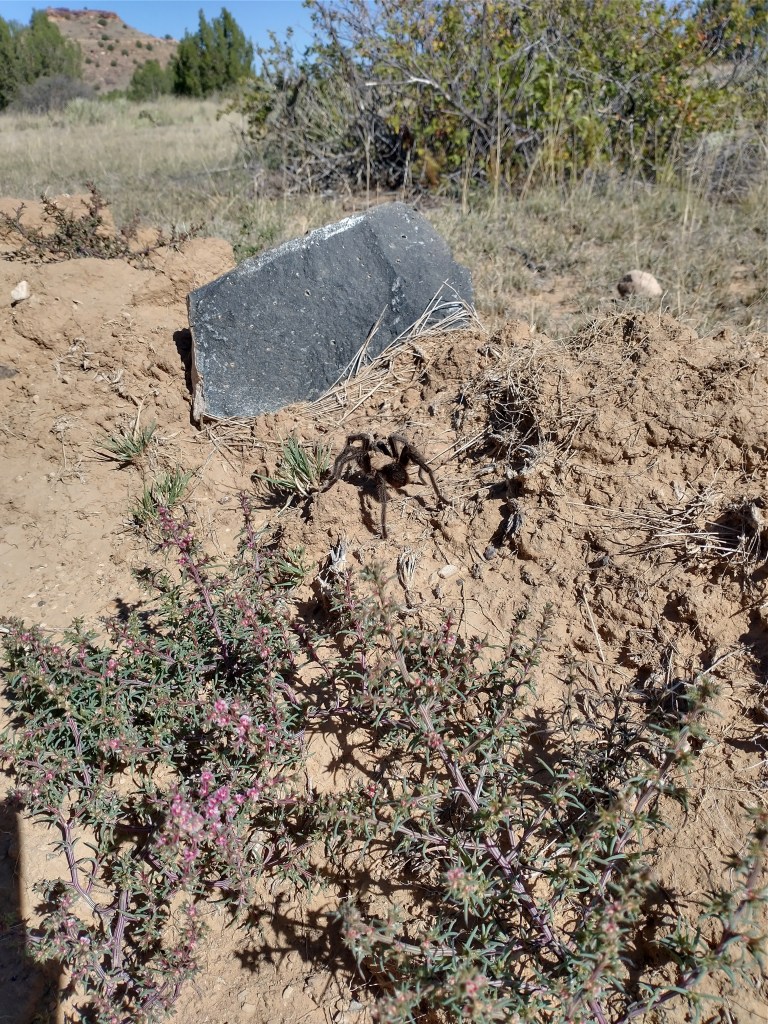
Unbothered, moisturized, in the arachnid lane
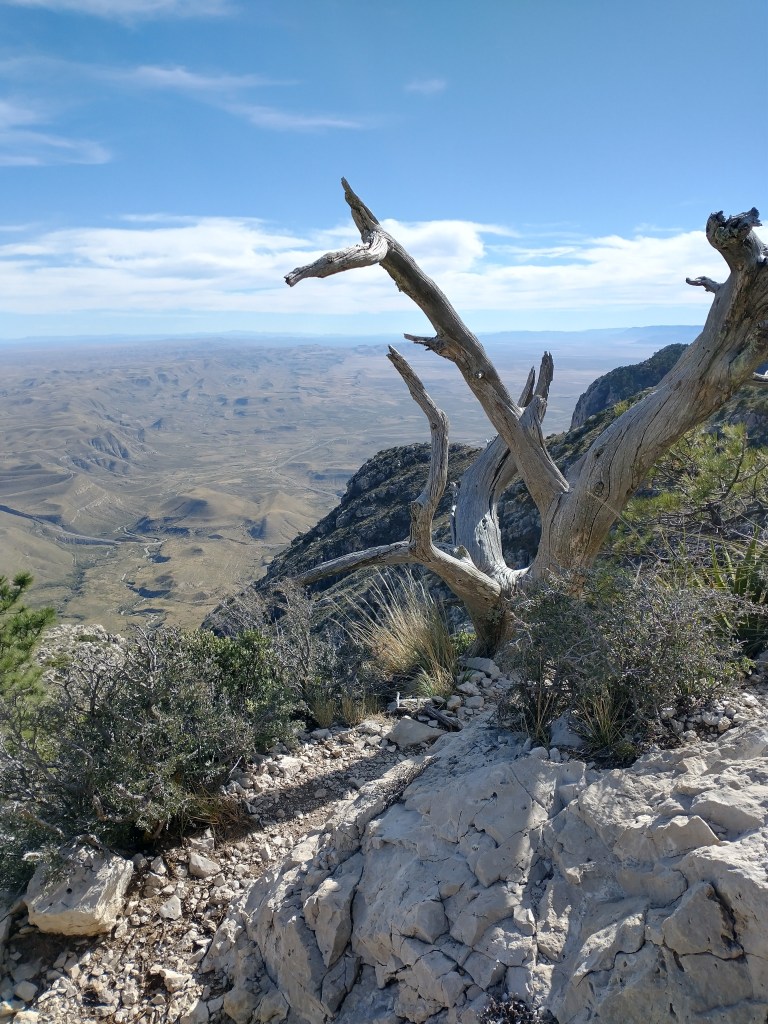
We started our hike around 10:00 am, in crisp wind on a bright blue morning. Above us, the mesa loomed—as did several other, equally-imposing looking mesas, all dotted with the same small green bushes. Nothing tall grew here but the rocks themselves.
I looked around from the trailhead, and wondered out loud which of the long, flat plateaus we’d be climbing that day. The trail claimed to be eight miles—surely it couldn’t be the one we’d parked next to? That seemed far too easy. But a confirmation from the map proved our destination the correct mesa, indeed. Nothing for it, then, but to get started.
The first few miles of entirely flat trail passed quickly, punctuated by several wildlife sightings. The dust at our feet held several surprises, for those with quick eyes (and hands, if you’re my one snake-loving friend). We saw a tarantula ambling along, unbothered and in it’s lane—although probably not moisturized, given the climate.
Shortly after, we nearly stepped on a young male Eastern hognose! One of the day’s finest sightings. One or more members of the party may have been moved to tears by this event. I can neither confirm nor deny, simply affirm that snakes are indeed, great.
Granola and M&Ms under the big blue
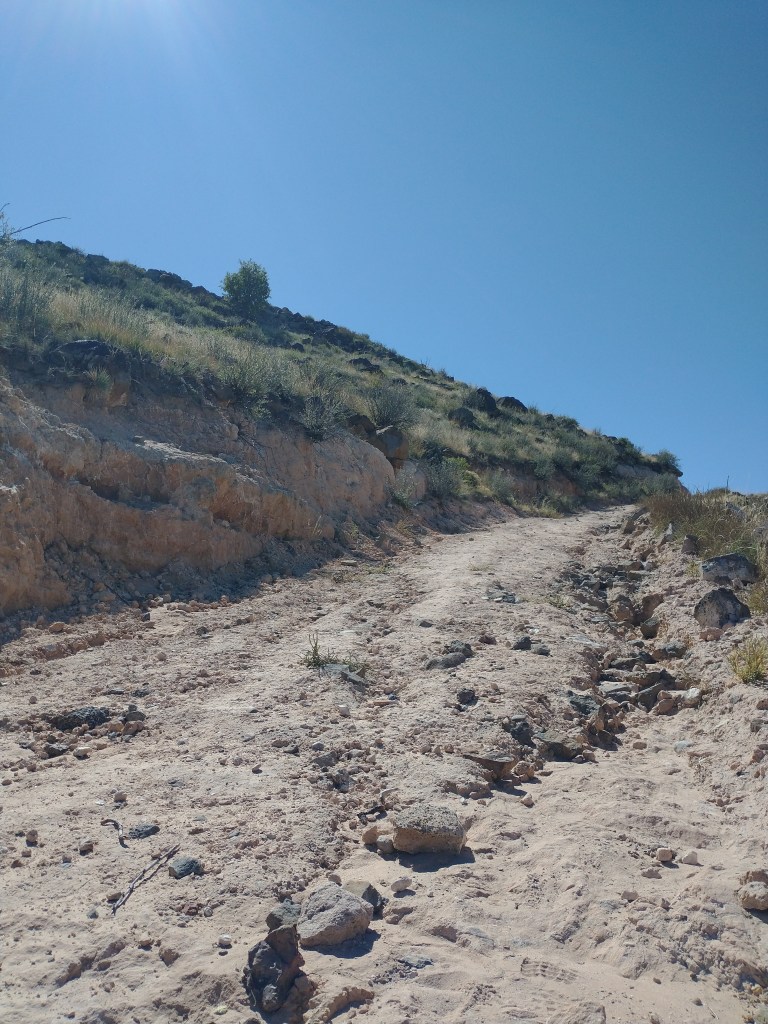
After a few calm miles of dusty, flat, and rock-strewn terrain, the trail turned upwards towards the only real incline we’d encounter on this highpoint trail. A wide rocky track wound sharply upwards in a couple of firm switchbacks that would take the air out of your lungs real quickly if you took them at a challenging pace.
But on that clear morning, we weren’t in a hurry. We took the incline slowly, picking our way up the lonely trail and resting at the mile marker bench. It seemed a shame to rush things, with the wide prairie starting to spread out below us as we climbed, and miles of undeveloped land stretching out in every direction, as far as the eye could see.
Part of me wanted to hustle—I had put my Fitbit on that morning hoping to get a good cardio workout on the books that day—but by the time we got to the third mile bench, I’d accepted the new pace. I have so many opportunities to go fast, and so few to do things with people who mean something to me. Why not match their pace? The point is the people, not the Thing Abigail Wants to Do Right That Moment Or She’ll Die (Probably).
We sat on and around the bench, eating granola and M&Ms under a devastatingly blue sky. It was good.
From the third mile bench, we ambled upwards, boots against white rock. Most of the 700 feet or so of elevation gain were behind us now, and we could turn near the top and look almost all the way straight down to the path we’d taken to get there.
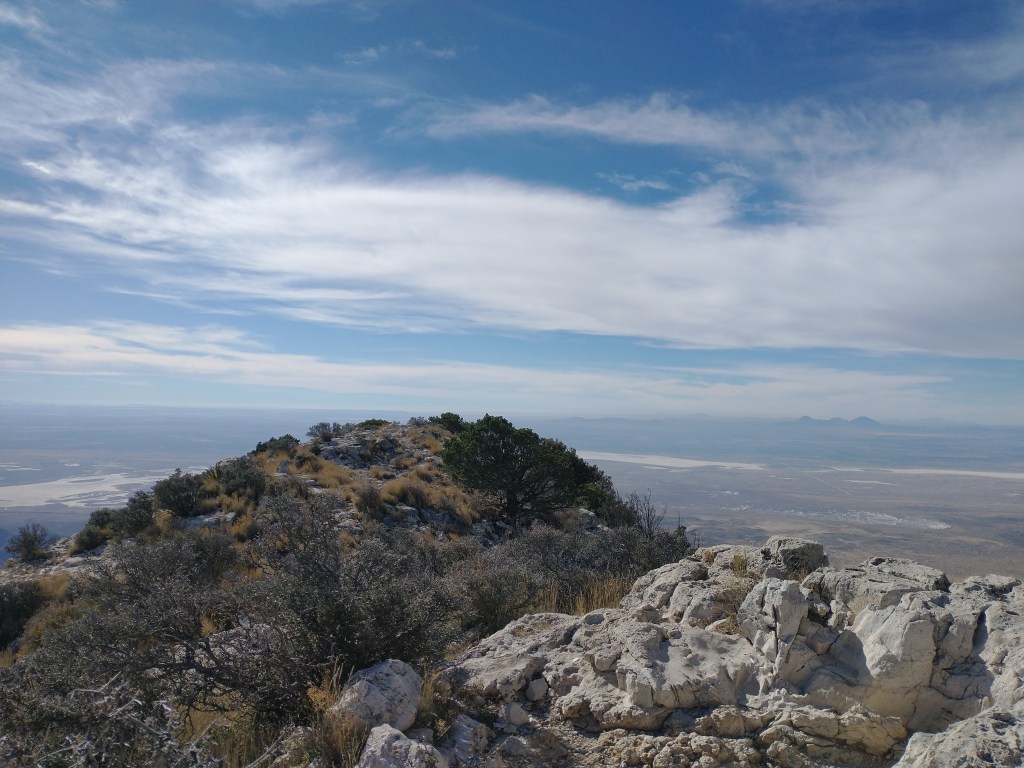
A last scramble, and that was it—we broke out onto the long, flat surface of the mesa, with nothing but dry waving grass for miles in every direction but down.
It’s a summit, we swear!
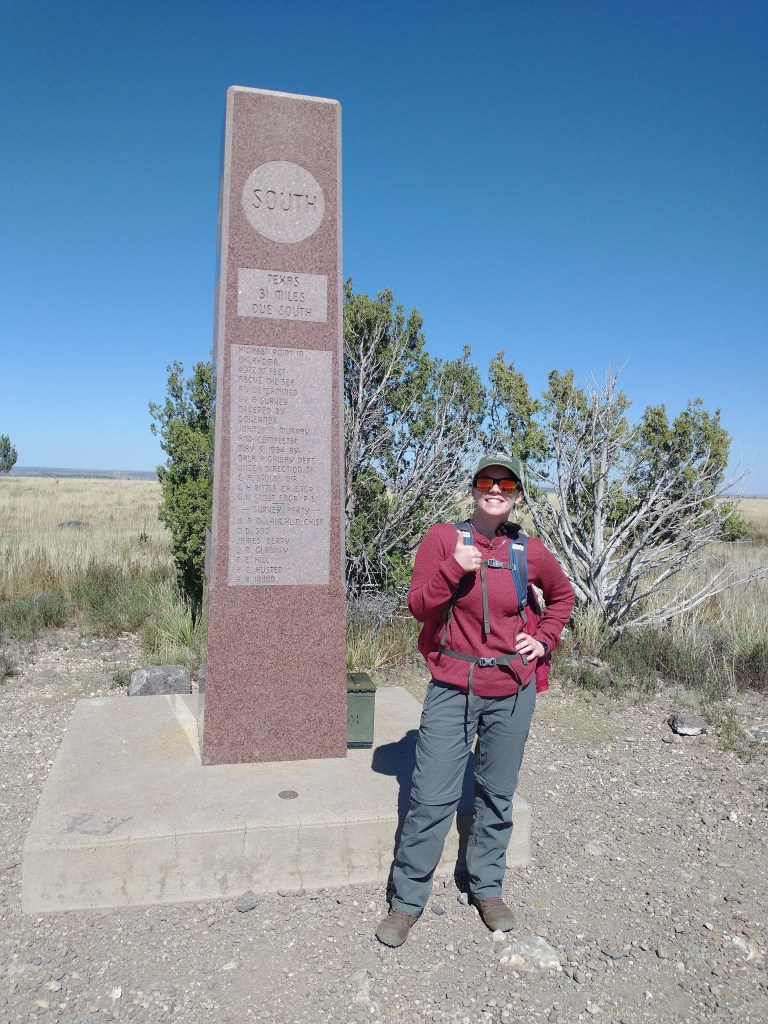
Oklahoma’s highpoint is somewhat misleading. At least in the sense that there’s not really a summit, so much as a long, evenly flat section of land on the mesa that is technically higher than all other sections of land, and has had an obelisk placed on it in an arbitrary location. At least, it seems arbitrary, to the naked eye.
My highpoint photo makes me laugh.
It’s a picture that really downplays the achievement. The mesa looks absolutely devoid of topography in any direction, and you’d never guess there was a trail, let alone one with any elevation gain. It’s just flat as far as the eye can see.
But, I promise, we did a climb! It was a rigorous 700 feet of elevation gain, even.
That said, if you need the feeling of having accomplished something, you can follow the trail all the way to the turnaround point at the end of the mesa, where you can look down over the wide prairie and survey your work. We looked out over a landscape dotted with cactus and juniper, waving grass and shrub oak, and felt the wind whip our faces in a highly satisfactory manner. Mission accomplished!
The obelisk marking the summit of Black Mesa shows the distance from the highpoint to each of the four closest states—Texas, New Mexico, Colorado, and Kansas. (Turns out that Cimarron County, OK is the only county in the U.S.A to touch 4 different states.) New Mexico is just a quarter mile away, from that point.
You can also sit on the concrete next to the obelisk, and write your name in the high pointer’s book, with a short message about your hike (and the snakes you saw along the way).
Grasshoppers of unusual size
With our purpose fulfilled, we began our route back down the trail, following the top of the mesa back to the more vertical parts of the route. The sun beat down, now hot despite the wind, and I adjusted my jacket even higher on my backpack to cover my neck from the rays. (This would later prove to have been highly ineffectual, in the sunburn department).
We trailed along, a little slower than we’d come, taking our time and making commentary on the egregious size of the local grasshoppers.
Ambling along the long, flat top of the mesa, I thought about the first of these highpoints I did, Texas. Being out here under the flat sky stretching from horizon to horizon, dust and rock under my boots—it reminds me a lot of that trip last year. We’re hundreds of miles from West Texas, but the desert is a big place. Even if this is a little more prairie and a little less cactus.
Just as we were about to hit the decline again—we saw her. A beautiful lone pronghorn antelope trailed along parallel to us, belly-deep in the waving grass. We all stopped to stare at her, and the phones came out to grab pictures.
There she goes. Fastest hoofed animal in North America.
I held my breath, not bothering to even grab at my own phone, as she bounded into the distance as fast as she came. Seeing an animal in the zoo in the Texas exhibit is one thing. Seeing it live and wild in the home of its birth is something else entirely.
She disappeared into the brush on the other side of the mesa… We waited about 0.5 seconds before bursting into a chorus of, “Holy SHIT, dude.” Snakes, tarantulas, and an antelope? The shortgrass prairie crawled with life!
Time flies when you’re hiking with buds
Once we got to the descent, the rest of the trail flew by in quick conversation about what to eat that evening, and commentary about the length of the trail. By the time we’d made it halfway down, we’d picked out a Cajun place in Amarillo, with an absinthe selection that would put several reputable establishments in Austin to shame. This included reading the menu out, line item by line item, so everyone could have ample time to pick out their selections.
Even as the sun rose and tilted in the sky, and we put miles behind us slowly but surely—it didn’t feel like long at all before we came up on the car again.
That’s half the fun of doing things with friends. You can’t beat good company for a good time.
So, that’s Black Mesa. Not the hardest highpoint, not the easiest, but lovely all the same. Eight miles and some change in a wide October, under a big prairie sky.
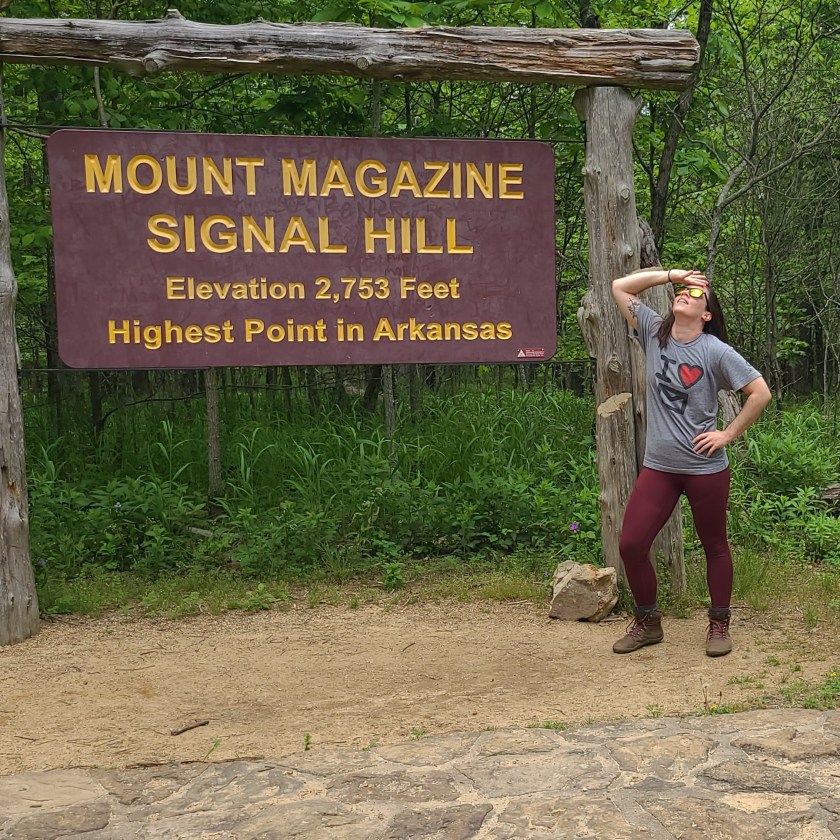
Welcome back to the highpointing saga! Today, we’re headed back to the south—to the green hills and rolling valleys of the Ozarks, no less. Highpoint number four is that fabled emerald peak (or more of a gentle rise): Mount Magazine! No more east coast business. For now.
Important disclaimer: today’s installment is brought to you by a family vacation co-opted into a highpointing venture. My dad has never said no to a reason to get outside and do something silly or reckless in his entire life. And if a kid suggests it—even, and perhaps especially, an adult kid—the likelihood of said silly business becoming an important item on the to-do list increases exponentially.
So, let’s talk about Mount Magazine.
What is Mount Magazine?
The highest natural point in the state of Arkansas is Mount Magazine in the lovely Ozark-St. Francis National Forest. At 2,753 feet, Mount Magazine stands above the surrounding valleys like, well. An ammunition magazine, if the French soldiers who saw the plateau and titled it as such are to be believed. This mountain is well-known for being the best spot in the state for technical rock climbing, and one of only two places you can go hang gliding. (Neither of which were on our lists for this trip, lamentably or otherwise.)
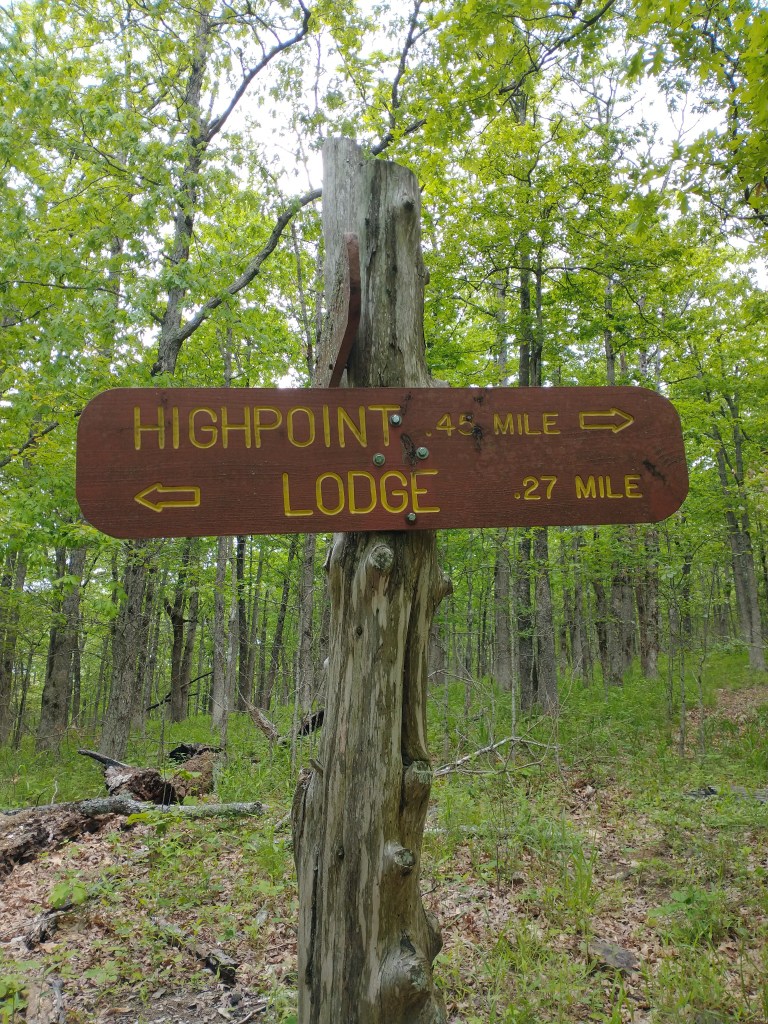
While there are several lovely scenic trails around the mountain, the one that leads to the highpoint is fairly short. Unlike many of the longer hikes on our list, it takes only 0.45 miles from the parking lot to reach the top on Signal Hill Trail. Completing the loop brings you to a whopping 1.4 miles on a smooth, mostly flat trail, surrounded by trees the entire time.
Let’s get rolling
Arriving at Mount Magazine involved some slightly unorthodox travel machinations. First, we agreed to make this hike the capstone of a week-long family vacation in Hot Springs, so I drove out to Arkansas nearly a week prior to completing the hike. That drive took nearly eight hours, a straight shot from Austin—wherein I discovered that yes, driving through East Texas still turns me back into an absolutely feral country girl.
The stereo saw a lot of early 2010’s pop country, and I’m not proud of that.
Once in Arkansas, we spent several days lounging lakeside and kayaking Lake Hamilton, before packing up for the final two-hour drive to Mount Magazine. That drive was unexpected challenging—not because of the roads, or the weather, but because I learned that I get carsick when I’m not the one driving on those tiny back roads with lots of twists and turns. NEWS TO ME.
We took AR-10 W to AR-309, but I fully admit I was not paying attention.
Through the fish tank we go
Finally, we hopped out of the Suffering Bus at the campground, at the start of Signal Hill Trail. It would be short jaunt to the highpoint, and the park staff had advised that the more scenic areas were best found by the lodge, slightly further down the mountain. As such, we planned to split our hike into two parts. First, the highpoint, to achieve Tallest People in the State status, even if only for a glimmering moment, and then second, to a shorter trail along the ridge with the views. With this determined, we set out on Signal Hill Trail with the whole posse of family in tow.
The greenery in the woods we entered immediately lapped up around our ankles thick and wet, the air humid as an aquarium. It doesn’t surprise me that 94 of Arkansas’ native butterfly species can be found on this mountain, with this weather remarkably similar to a greenhouse or botanic garden. While it was only maybe 80 degrees out, the humidity made us all substantially warmer. And stickier.
We followed a winding trail up a smooth slope with only a small incline. The dirt trail wound through the trees, climbing upward at a steady but not challenging pace. The largest obstacle we encountered was a pipe sticking up out of the ground in the center of the trail at one point, which tripped at least one unfortunate member of our adventuring party.
Summit on Mount Magazine: trees
We reached the summit within about 20 minutes, including accounting for time taking a wrong turn and stopping to smell the flowers! Extremely efficient, this highpoint.
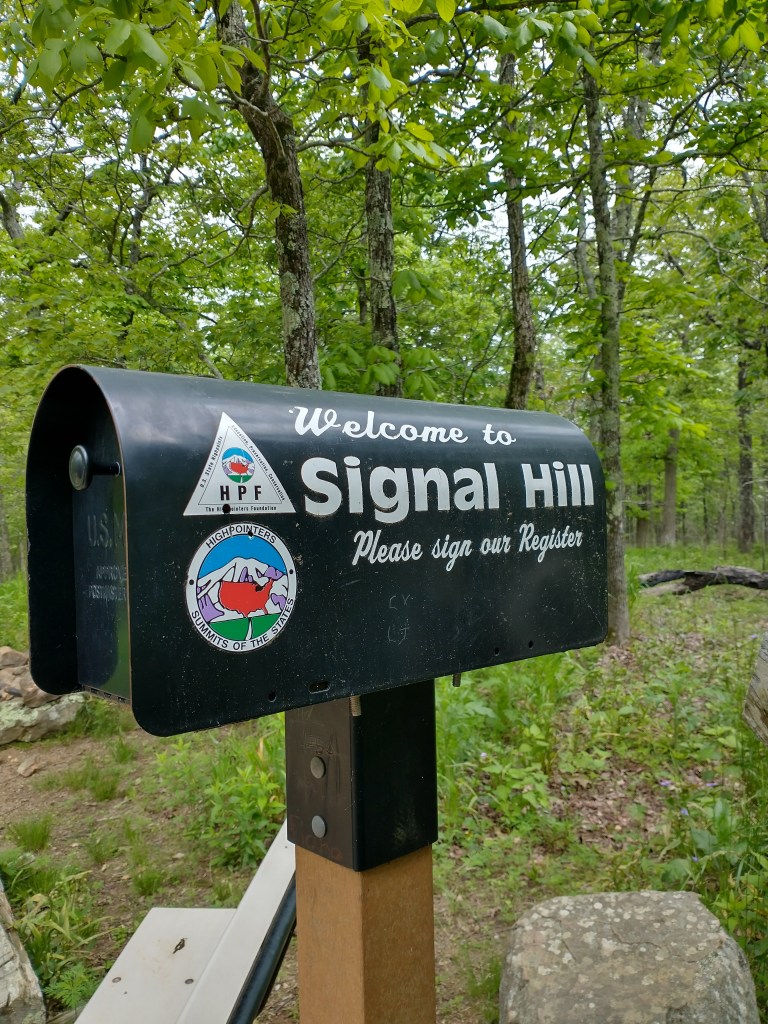
The top of Signal Hill proper is perhaps the least visually notable peak on my list so far. The whole thing is covered in trees, and so breaking out onto the flat top of the hill is really just entering a small clearing in a swathe of trees, with the Highpoint Monument and a big sign declaring your victory.
The Highpoint Monument, a flat concrete construction on the ground in the center of the clearing, shows the 6 natural divisions of Arkansas. If you are possessed of too much imagination, you can stand on the Ozark Plateau region like some sort of ridge-backed god, and tower over all the remaining representations of the state with a prickly, humid sort of authority for a moment.
After a brief interlude to climb the sign, sign the summit register, and take the requisite number of increasingly goofy pictures, we proceeded to part two of our Mount Magazine quest.
Man, those mountains sure are blue ridged
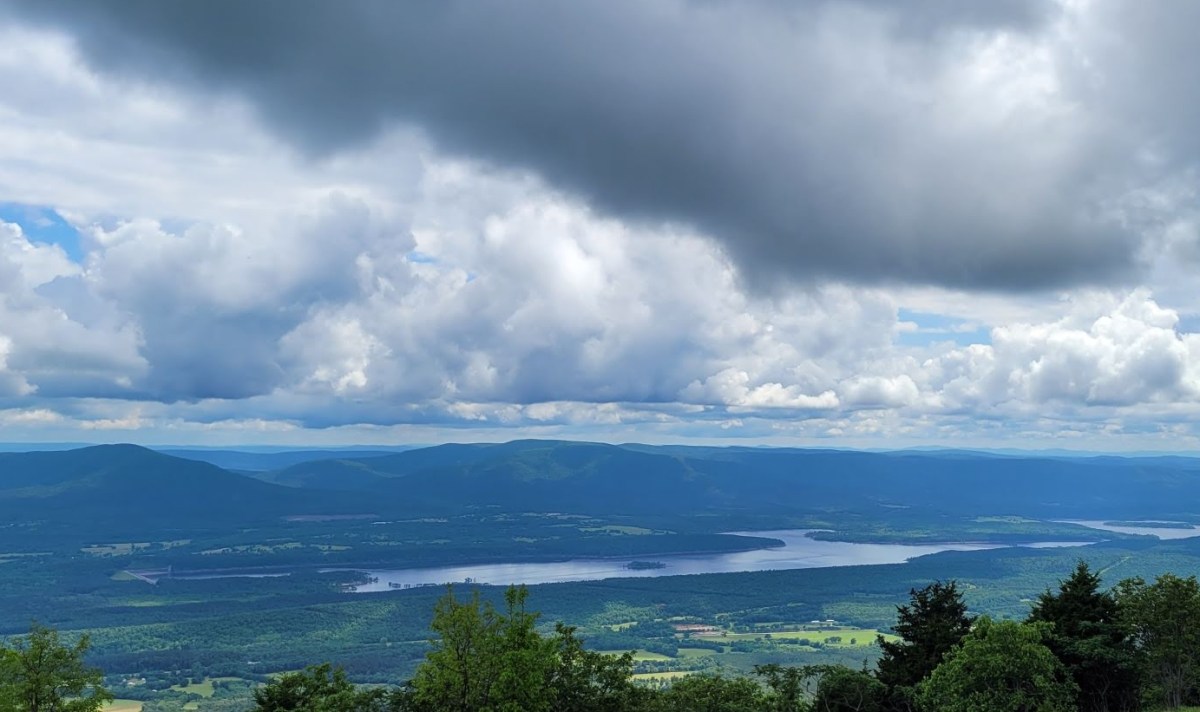
A short drive from one parking lot to another took us to the lodge, a popular local tourist destination—and for good reason. This is where the views were hiding! The lodge, built on the mountainside, overlooks the Petit Jean River Valley and Blue Mountain Lake. From the balcony at the back, you can look out over an emerald valley punctuated with a sapphire river leading into an equally-sapphire lake. Here in late spring, the colors of that view sprang out with verdant intensity.
Off in the distance, a low line of blue mountains wrote the horizon line.
It may not have been the highpoint of Mount Magazine, but I think several of us felt that view was the high point of the trip. We hung out at the lodge for a few hours, ate lunch, and took another short hike along the mountain’s edge, following that view. Bear Hollow Trail prioritizes the aesthetics of the hiking experience—boasting at least a quarter mile of trail with valley views before dipping down into the closed greenery of the inner trails again.
After about an hour or so of sticky hiking, we called ourselves successful, took one more peek at the vistas, and packed ourselves up for the cabin again.
Country roads, take me home
We hit the road for the drive back to our cabin with a couple hours of daylight to spare. Chatter in the car skewed very strongly towards kayaking on the lake later that evening—and it struck me how very different this trip was from the last. My last highpoint, Greylock, I reached without speaking to hardly another human soul on the day of the hike. This one, I’ve been listening to backseat banter about swimming and fictional wizards—juxtaposed against a backdrop of adult conversation about Boethius and classical education—for the better part of the day before ever arriving at the hike.
In the backseat on the return journey, I tuned out the noise and watched the scenery pass out the window, feeling again about ten years old. It’s funny how that feeling sticks around. My dad driving, the chatter swelling up and around, and I felt, almost comfortingly, like just another bee in the familial hive again—however briefly. (The very antithesis of Appalachian solitude, really.)
Slightly nauseated backseat reflections
Perhaps I should think of Mount Magazine as an underwhelming installment on a 50-stop journey with bigger and badder trails on it. And in many senses, it is. But there are 50 whole high points on this arbitrary list I’ve assigned myself to accomplish—and that’s a lot of trips. A lot of opportunities to go places and do hikes of varying magnitude, with varying groups of people; from large family outings to all by my lonesome. (There’s range, dahling.)
Each has value of a different sort. Every person I take on one of these trips brings something very different to the table—and some handle the gift that is being included well, and some don’t. My parents and the slew of kids they still have at home treated the opportunity to come with me as a gift. Something we got to share both experiencing and facilitating, and take joy in all of the above equally.
And for that, I am grateful. My life is so different than theirs, that being able to share things with them is a gift I don’t often get, either.
So, no, it’s not thousands of feet up in the air, and no I didn’t risk life and limb to accomplish some physically strenuous monstrosity of a goal that will sit forever in the locked China cabinet of the mind. But I did get to share a part of my life with my parents. And while that’s not a goal I specifically had when I began this project, it’s one I’m delighted to have discovered and will continue to cultivate.
At the end of this project, maybe I’ll have collected 50 different types of experiences, shared with people as varied as the terrain we travel together. Each one unique, each one valuable.
Well, this is unexpected. Texas first for the Texas resident, sure. Louisiana, a natural progression therefrom.
Massachusetts. Excuse me? One of these things is not like the others.
There’s no grand explanation, other than that there are many benefits to having a corporate day job based on the East Coast. (Many benefits.) I flew out to Boston for work for half the week in late March, and staying an extra few days to knock out the third on the list seemed a reasonable, providential endeavor.
After all, why shouldn’t I? That has been the practice of my last year, after all. To conceive in my heart a desire, and then simply stretch out my hand and take it, letting the wanting be reason enough. So, I did.
A brief primer on Mount Greylock
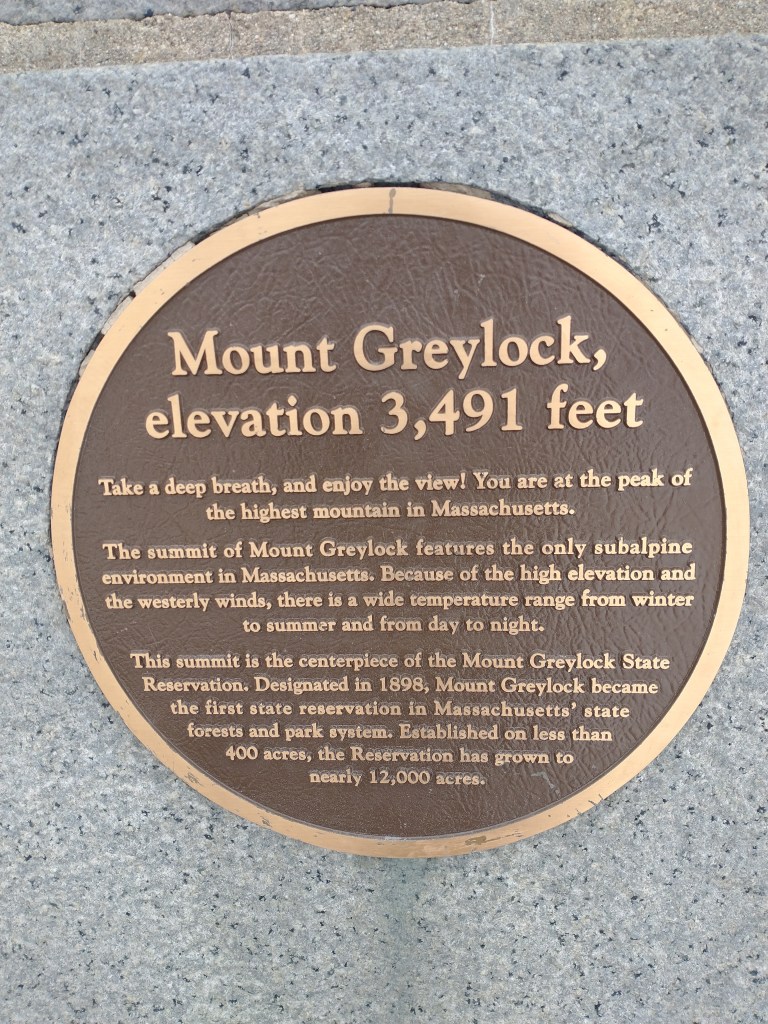
Located on Mount Greylock State Reservation, Mount Greylock is the highest point in Massachusetts. At 3,491 feet, it’s a reasonably-sized peak for the area, but on the shorter side of the list when it comes to the full 50. During the summer, you can just drive to the top—but I would be going in March, when the roads would still be impassable. (Skiing is popular in the winter in the Berkshires, which surprised my very Southern sensibilities. There’s snow up on them there hills?)
Now, despite the road closures, hiking remains an option all year round. Great! There’s just one catch—you’ll need spikes, or snowshoes. And the best trail for making the summit, Bellows Pipe Trail, is 6.5 miles and considered “a challenging route”.
Nice.
Navigating the logistics? Hard. Climbing tall stuff? Easy.
I spend a couple paragraphs every time I do one of these trip recaps talking about the logistics of arriving, lodging, transportation, company, and related sundries. It’s much less exciting than, “Hey look, here’s me on a tall thing,” which begs the question of why include it at all.
The answer is that I want to acknowledge what has, historically, been the hardest part of these things for me: Getting there. Talking someone into going with me, affording plane tickets, driving a car that won’t run out of battery in the middle of nowhere, having a work schedule that allows travel in the first place—those are the difficult parts. Climbing tall stuff? Easy.
That said, I’ve gotten a lot better at solo travel in the last year. From the conception of the desire to do so, to the planning (which invariably expresses itself as, “Haha wouldn’t it be funny if I just left the country for a week? Haha, wouldn’t that be a great joke? Haha, I’m buying plane tickets…”), to the execution. I can just do stuff I want to do, without waiting for anyone’s permission. And that’s cool as hell.
Hozier’s latest EP and a spirit of recklessness
For Greylock, I was already in Boston for work, and the entirety of the hiking portion of this trip involved renting a car and driving three hours to a private mountain Airbnb. In a walkable town, no less. Relatively uncomplicated, in the grand scheme of things. The hardest part of that endeavor would be driving out of Boston without murdering any of the fearless pedestrians or ambitious truck drivers that throng the streets. (And to that I say: YOLO.)
So, hopped up on a cocktail of positive post-event emotions, I hit the streets of Boston early on a Thursday, armed with Hozier’s latest EP and a spirit of recklessness. The next three days would be almost entirely spent in solitude—and after the recent rush of socialization, I found myself looking forward to it.
The three hours to the Airbnb passed quickly, after the teeth-clenching stress of exiting the city. Countryside spread out quickly past the city limits, concrete fading away to sprawling trees and winter pastures. I drove winding roads through forests, snowfields, and mist-covered glens, with an odd, growing feeling of realizing that the world does, in fact, look like this. The photographs on the cover of Country magazine at my grandparent’s house as a kid captured real places—like the red barns and fog-covered fields just out my windows.
I reached my Airbnb with time to spare, and had just enough time to walk to the grocery store before dark—another strange, purple occurrence. People live like this, too. Walking places, not spread thin across the world like butter sliding haphazardly across a skillet.
The Texan had much to reflect on.
Snowshoes or spikes? Choose your fighter!
The morning of my climb was simple, straightforward. Alone, I had little to do but eat and dress, take a moment to have coffee by the window on my own sweet time. My hike waited for me, only 15 short minutes away, predicted to only run around four hours, round trip. And I wasn’t in a hurry.
I packed slow, drove slower. No one to rush me. The sun hid behind powdered clouds on the drive, mist weaving in gusts over the winding highway. I passed very few cars. Even just a weekend up here in these wide hills was ghostly, intimately silent.
When I arrived, the trailhead was muddy. Not snow-covered. I immediately had a choice to make: Snowshoes or spikes? I’d used neither before, but packed both in an abundance of caution—and this was unfamiliar terrain. Looking around, there wasn’t much snow on the ground, most melted. Who knew what it would look like higher up, though.
I rolled the dice, and picked up the spikes, leaving the snowshoes in their bag in the car. For better or worse, I almost always choose to travel light.
Imagine Boulevard of Broken Dreams playing loudly in the background
The first mile or so passed simply, a quiet wind upwards on a slick, muddy trail. I was immediately glad that I’d chosen spikes over snowshoes, since hiking involved mostly dragging my boots through slick, slightly-vertical mush. No snow on the trail thicker than an inch or two at most.
And while the parking lot below had held a handful of cars, I didn’t see anyone else on the trail—and wouldn’t for hours.
As I walked, slow and careful up the steep grade upwards, I felt the silence settle over me. The last three days of meetings, airports, and even the joy of other people I’d met peeled away from me, a shed skin sloughed off. People, especially people you immediately share so much with, provide such a fountain of delight. It’s a good thing, community, connection. A dear friend once called it sacred.
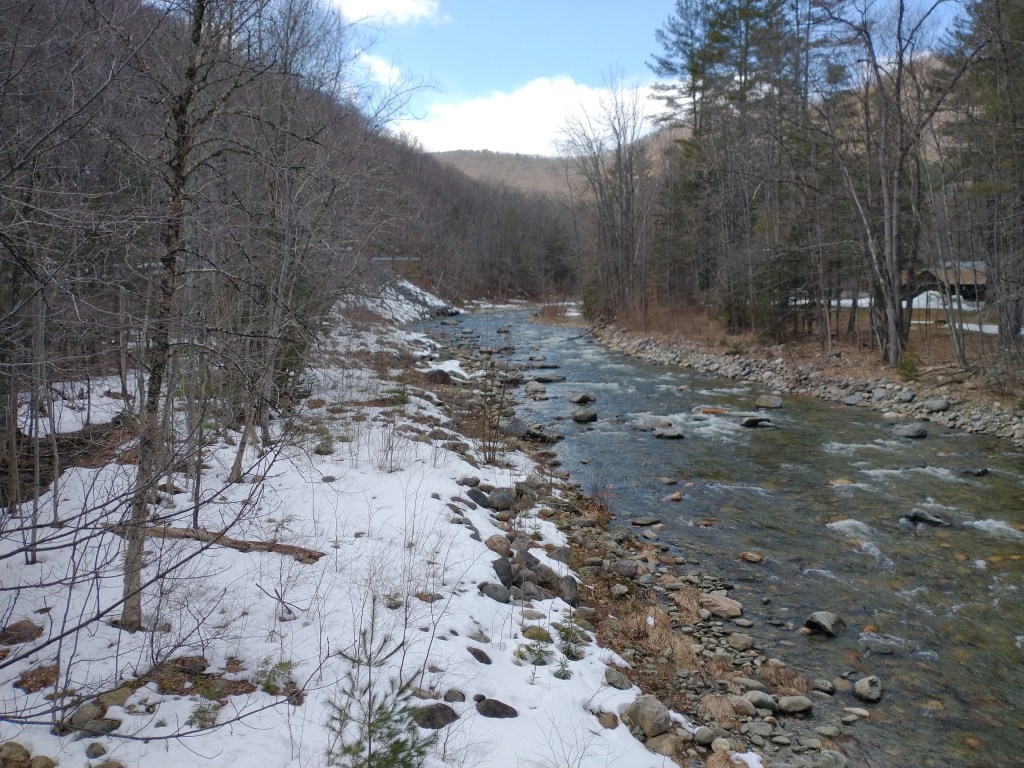
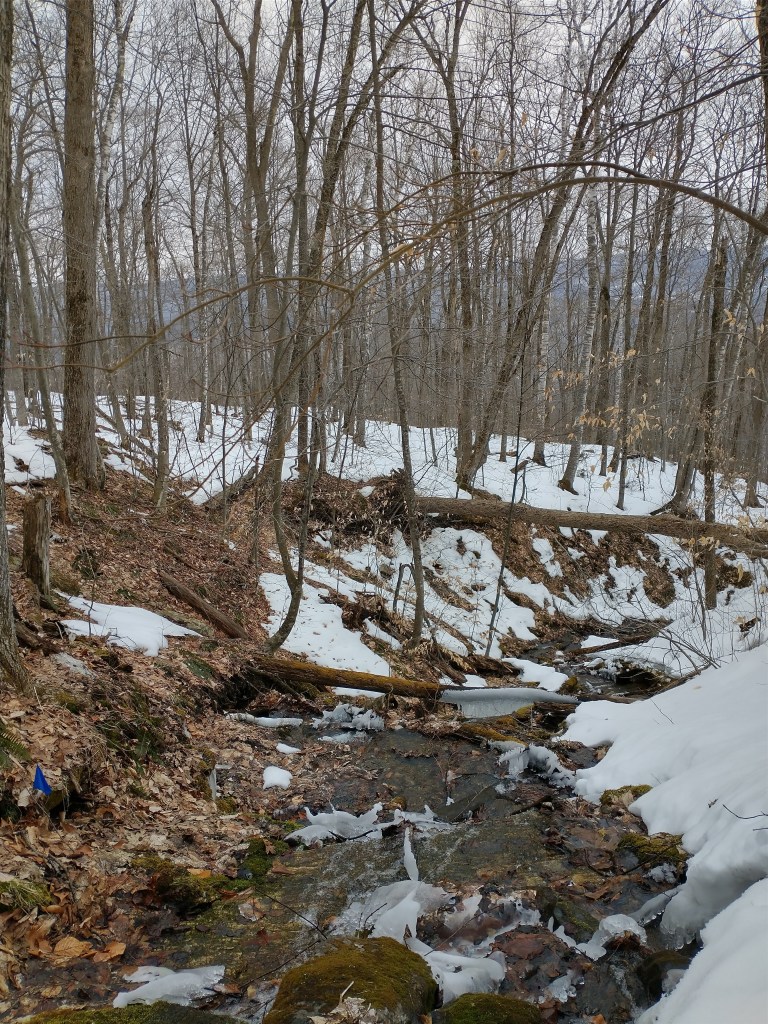
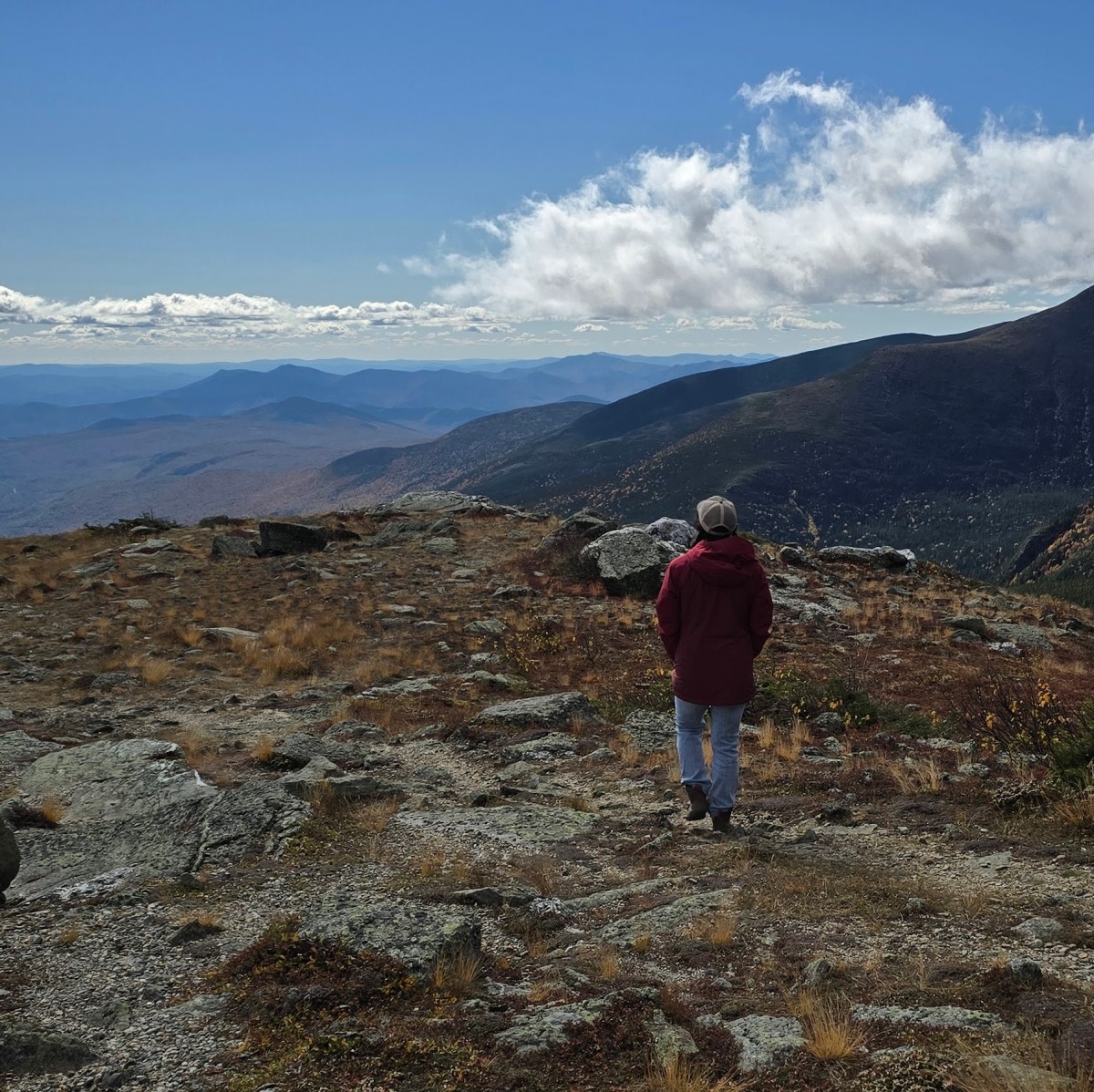
But there’s this, too: Walking in slow-piled snow, alone, for what felt like formless hours. Jacketed against 40-degree weather, taking a long slow trail upwards at my own pace. It’s just me, here, in the sweeping wind between naked trees, stripped to the bark for winter. I can hear the streams, thawed for spring, flush with snowmelt, as easy as the beat of my own heart. The gasp of my own breath is just another half-wild sound in the wild around me.
I am so completely, utterly alone. And I’m… happy?
Which is such a powerful thing to become aware of, as a change in one’s self. I’ve spent enough of my life waiting for someone else to do what I want to do. Sure, I still catch myself turning to my side, reflexively looking for someone to share the moment with, finding nothing, no one.
But this is the fact of it: No one else will follow all the places I want to go. Sometimes, these roads are just for me. And being a little lonely on a trail is nothing compared to waiting; and watching your dreams drip away from you.
Coming to you live from the Appalachian trail (briefly)
An hour or so passed without incident, marked only by a distinct increase in snow depth and the clouds collecting in the distance. I passed a small shelter, covered in graffiti, crossed a series of small snowmelt streams. As I got higher on the mountain, the nature of some of these trails as ski trails began to evidence itself—the drifts got deeper, and some sharp bends had me scrambling upwards on my hands and knees through snow piled several feet high.
The Bellows pipe trail is several smaller trails smashed together—and, briefly, includes a section of the Appalachian trail. About two-thirds of the way up, maybe slightly less, you spend a couple bends on the actual Appalachian trail before the summit trail breaks off again.
It felt like foreshadowing, that moment, seeing the sign mundanely directing towards the trail, up and down. One of my big dreams is hiking the whole thing start to finish—and I did think, briefly, of simply heading down that trail and never coming back. Catch ya later, suckers, I return to my people.
But I had to come back and write this essay, at the very least, and continued. One day, trail. One day. I’ll be back.
The clouds, also, continued to pile up overhead, and I did some light mental math about what to do if it rained. Thunder and lightning meant turning around, but rain by itself was tolerable, in my waterproof gear. Nothing on this trail so far had promised anything close to a steep edge or drop-off, so, I’d risk it.
But no rain was forthcoming.
On the last stretch upwards—just as I could see the concrete tower that market the summit looming in the distance, I ran into my first other person of the day. A skier, in short sleeves, waterproof pants, and well-loved skis, slogging upwards to the peak of the slopes. (I assumed a local, based on the attire, and instantly felt overdressed.) I wondered about the feasibility of skiing through the close turns and melting snow below, but he seemed to be having a good time.
We greeted each other, and I quickly passed him in my trek upwards. I noted, as always, the rarity of being a woman alone outside. I often meet men alone, and see women with partners semi-regularly. Women hiking by themselves are few and far between. A fact which saddens me more than I have language to express.
Alone again, as I neared the top, light snow began to fall.
The summit: It’s mostly flat?
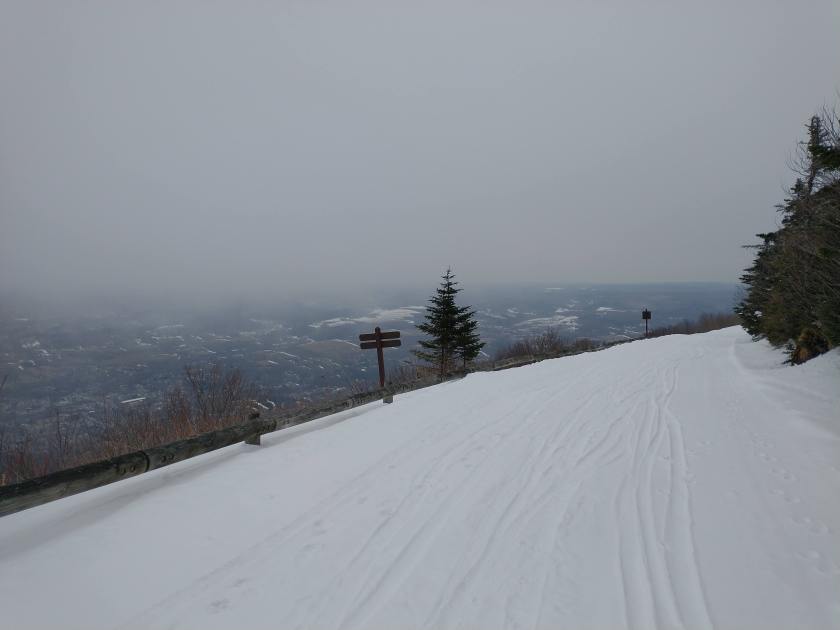
Greylock’s summit is a somewhat deceptive thing. You don’t reach a peak, so much as you break out of the trees onto a road. In the summer, you can drive to the top, but here in March, it’s still covered in snow.
Above that road, there’s a short path past an empty lodge and some picnic tables so deep in snow you can barely see the top, and then, finally, a break in the trees reveals the memorial tower.
I waded through the drifted snow, and broke out of the sparse evergreen trees to a large, flat, grassy summit.
Made it!
The top of Greylock is large, more of a plateau than a peak. From one side, you can see the valley below, and the surrounding mountains spread out in a ring ranging out to the grey-clouded horizon. The sky meets the hills with much the same uniformity as the sky meets the ocean—both are dark grey and lightly menacing, here.
On the other side, Greylock’s 92-ft tall WWI memorial tower scrapes the sky.
This monument, the Veterans War Memorial Tower, resembles a lighthouse, and marks the service of all servicemen and servicewomen from the Commonwealth. In the summer, it’s open to the public, but winter has snow piled a foot in front of the (locked, ask me how I know) door.
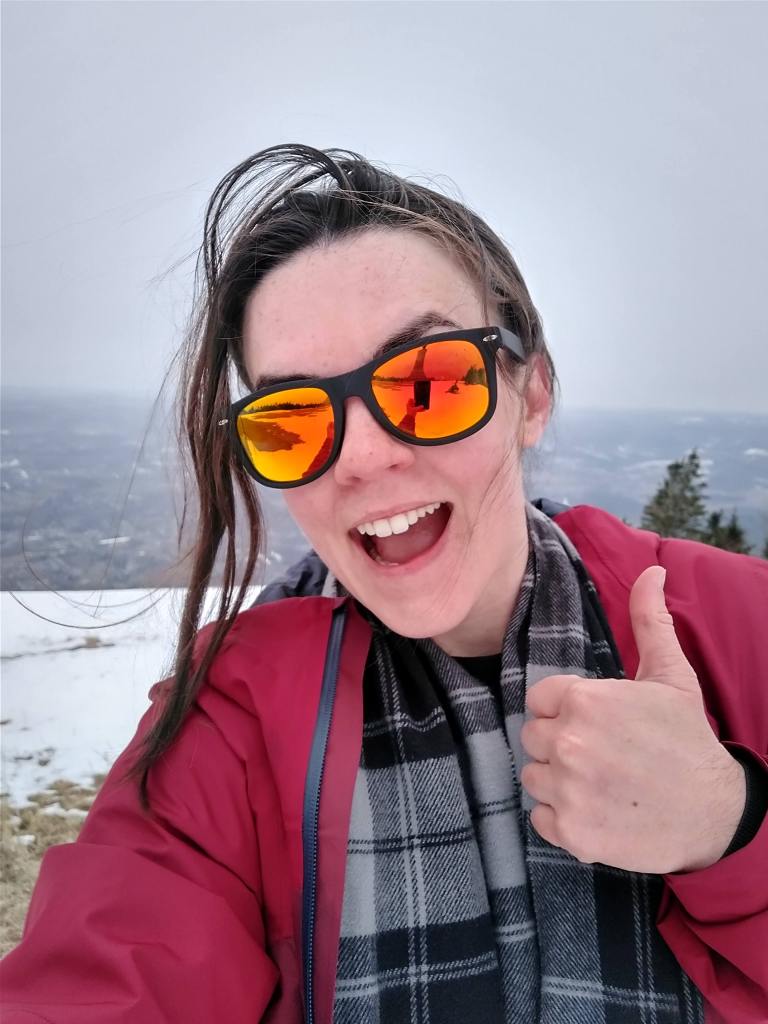
I made a loop around the top of the summit, as snow powdered my hair and wind—stronger here than it’d been below the tree line, but not unbearable—bit at my cheeks. The view, blue-ridged and whatever the most complimentary way you can say dreary is, stretched out gorgeous from every angle. Grey, distant, and utterly beautiful.
That’s Greylock, baby.
After about fifteen minutes of trying to take comprehensive pictures of the view for friends, family, and myself—it was time to brave the descent.
Knees are god’s curse to mankind
It is at this point in the journey that I must be honest with y’all—I was doing something very stupid here, with this hike. Two weeks prior to my trip to Boston, I tweaked my bad knee in a jiujitsu round, caught in a heel hook that I didn’t tap to quickly enough. All that week in Boston, I’d been uncharacteristically sedentary, as walking for more than about fifteen minutes at a time sent excruciating pain up that leg. Once irritated, I’d generally have to stay off my feet for a few hours until it subsided… A fantastic injury for one of the most walkable cities in America.
Naturally, at the end of the week, I decided to hike six miles as previously planned.
The good news was that inclines seemed to be better than declines, so getting to the top of Greylock wasn’t an issue. Twenty minutes or so into the decent, however, I became very aware of my poor decision-making. The knee made itself known, compression sleeve or not, loudly. It’s the getting up the mountain that matters, getting down is way less relevant. Right?
After about half an hour into the descent, I stopped for ten minutes to sit in the snow and take painkillers. Snow still drifted down from the sky, and I tilted my head back and closed my eyes. I wasn’t in a hurry, I reminded myself. I had time. I could take it.
I picked up again after a few minutes, resolving to slow my pace, and lean on my poles more. The trail wasn’t going anywhere.
Mission status: SICK
This resolution lasted exactly as long as it took for a metric fuckton of naproxen to kick in—and for the downhill section of ski slopes to appear, unsupervised.
When you have an injury, naturally, you look to minimize stress to that area. Going downhill properly, step by step, would cause strain. Hurling myself bodily down the slope—face-first or primly like a schoolteacher descending a playground slide—would cause less strain to the aforementioned knee. Also, it would be sick.
So, I did. I slipped and slid, thanking the thick waterproof material of my heavy pants for enabling the seal-like gracelessness with which I sent myself downhill. After the first slope, I was deeply grateful for the solitude on the mountain—mostly because no one else was around to hear me cackling with laughter. Yeah, I slid down on my ass. What about it?
That was fun. Just truly, ridiculously fun. It was freeing, that wide-open dearth of company. And that’s so strange.
In the open space beside me where no one walks—I can toss myself downhill without reprimand. I can slide on my ass over snowdrifts and gleefully push the limits of my body with no one to caution me otherwise. It’s a deep inhale, this space to know my own knowledge of my own physical limits. I know what I can take. No one else gets to determine that for me, and no one else truly knows. I get to find and push that ceiling. That’s a gift.
I was on a mountainside, ice-pick deep in snow, and being just so stupid. And having a fabulous time with it.
Back in mud territory
The last hour was defined primarily by two experiences: The constant companionship of stabbing knee pain, and the sudden realization that I started accidentally freestyling my way down the mountain instead of staying on trail. (That happens, when your method of locomotion becomes rolling.) Sorry, signs warning to stay on the trail. I also didn’t want me to be doing that.
When I reached a crossroads I didn’t recognize, I returned to the serious business of getting back alive. A quick check of the map got me back on a route back to the car, with just under half an hour left in the hike. A good thing, too—I was now at “don’t bend it and hope for the best” with my right leg.
I walked, back in mud territory now, so no danger of sliding, the last mile or so back to the trailhead. The snow had stopped, but the sky hadn’t cleared, and the overcast sun felt a long, long way away. I walked quietly at this point, not worn out so much as peaceful. Content that I had done what I came to do.
Silence held, and the wind blew chill. The spirit of play quieted back to reflection.
I’ve felt a lot of strange joys in the last year—and found a lot of strange disappointments, too. In this quest to find what brings joy, what makes the heart beat, there is too an experience of the opposite kind. This does not bring joy, this does not delight. The highs are high, and so too are the lows. This, not that. That, not this.
The feeling in the last leg of that journey was none of those. I felt so little, honestly, I was a little concerned. What’s wrong? Does this not please you, I said to the little gremlin that lives in my brain and makes more decisions than I would like to admit.
But no. This wasn’t discontent I felt—just a quiet, pleasant happiness. No insane joy, no wild high, just the comfortable happiness of doing something I wanted to do.
Alone is enough
It was a quiet, easy thing to get back to my Airbnb on the hill before dark. I showered, made a sandwich, started to upload pictures and shared them with dear friends and family. Their support and enthusiasm rolled in immediately, so precious and palpable. (I laughed at myself a little, seeing it—how could I think I was really alone, even all the way out here, when so much love went with me everywhere?)
Settled on an orange divan under a knitted blanket so sapphire you could cut and mount it, I read and scrolled until the sun went down in a pleasant silence. Sounds filled the twilight: the ache of the radiator a few feet away, the ghost of the wind against the eaves, the creak of the floorboards. So many quiet noises, and my own breath.
Alone, I could hear everything. Alone, I wondered, if I did not fill that moment more fully than I ever might have otherwise.
What is more timeless than the romance between a woman and her checklist? (Or a woman and her excel spreadsheet, depending on the era). The sparkle of electric chemistry on the moment of creation, the unbearable tension of those first few items checked off, the delight of so many challenges yet to come spread out over weeks, perhaps years. It’s easy to get carried away, imagining visions of checkmarks yet to come…
Anyway.
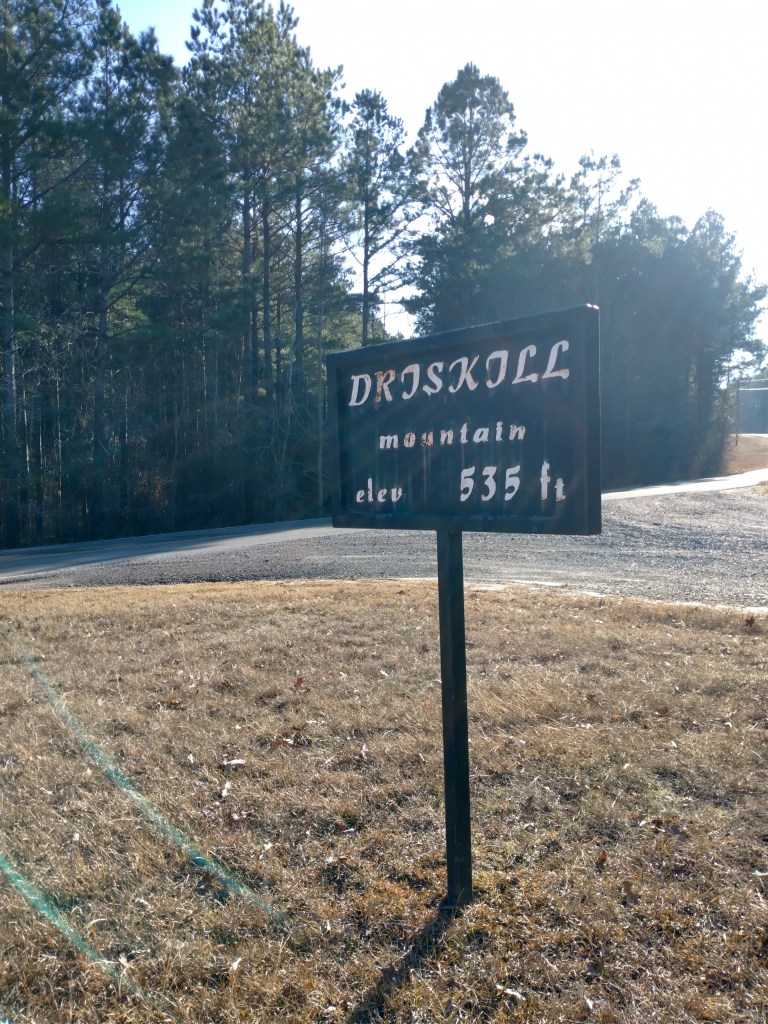
The point is this: I got to fill in one more green box after completing Driskill Mountain, the second highpoint on the list, on the last day of 2022.
What is Driskill Mountain?
Driskill Mountain is the highest natural point in Louisiana, making it a logical next on the highpointing list if you’re Texas-based, as I am. At an elevation of just 535 ft, it’s a far cry from the windblown summit of Guadalupe Peak, but it’s ease and geographic convenience made it a natural next step. The trail runs about 1.8 miles, there and back, with just a very slight increase in elevation throughout.
(Seriously, there’s like, one steep slope.)
According to Josh and Lindsay Sanders, the speed record holders for highpointing the lower 48, Driskill Mountain is… “A short mountain. Quite frankly, I don’t know the technical definition of a mountain, but this is not one.”
Poor Driskill! Such negativity.
Welcome to Arcadia
The hardest part of hiking Driskill was, as per usual, getting there. Six and a half hours from Austin, this highpoint called for another weekend excursion. Not exactly a do-it-all-in-one-day endeavor, unless you just really enjoy driving through East Texas. So, once again, I packed up a weekend’s worth of gear, booked an Airbnb, and just went.
The joys of simply being able to decide you want to do something and just doing it. Unparalleled, man.
Once you’re in Shreveport, LA, it’s a reasonable hour-long drive through the winding countryside to Bienville Parish. Driskill itself is tucked away on private land, at the end of a series of back roads, twisted intersections, and a surprising number of references to Greek mythology. (Arcadia? Elysium Fields? Guys, what gives, this is Louisiana?)
But finally, at around 3:00 in the afternoon on the last day of the year, I stepped out of the car to rising pines, golden sunlight, and a sign that proudly proclaimed, “Driskill Mountain”.
Hiking Driskill, the long and short of it
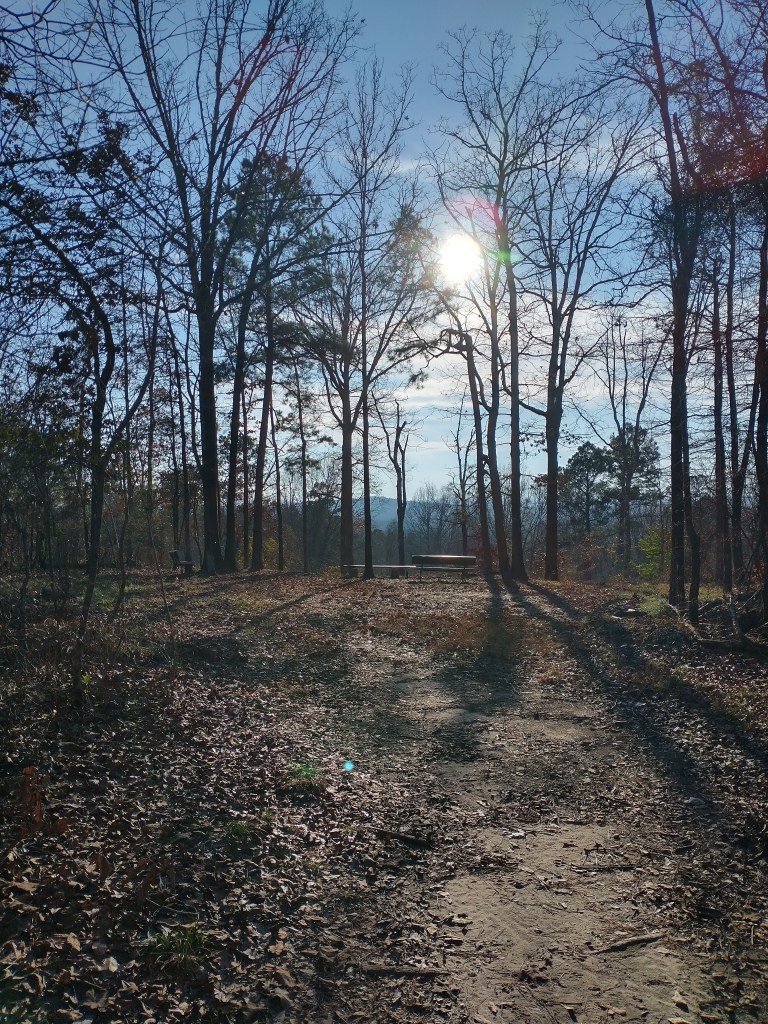
The road up Driskill began as a gravel road (yes, road), next to a cemetery. You park at the church, walk past the charming cemetery, through a gate shrouded over with pines and promise, and onto what looked like a logging road. Following this road for about a quarter mile, perhaps less, leads to the trailhead proper.
The trail was soft with fallen leaves, and the wind whispered over them. Just near the beginning, a fallen tree had been left over the trail, creating what looked from a distance to be a faerie portal, beckoning, beckoning. Perhaps whatever is through this gate will be a little fairer, a little more mysterious than what’s left behind.
But of course, the reality of the thing was a stoop under and a laugh, and finding, on the other side, the same leaves and gentle incline as before.
The ground slipped a little with mud under the leaves, and the trail, clear-marked, pointed loudly and insistently where one ought to go. “Don’t leave the marked trail”, ran the signs. “Highpoint this way”, announced the next.
Heard, loud and clear. I followed the signs dutifully.
What sort of challenge is this, anyway?
I made good time up the clearly-marked twists and turns, waving to a descending pair of a hikers with a couple of dogs, shuffling through the piled leaves. It was lovely. Easy, even. But all the while, I wondered—is this it? Is this gentle incline upwards on a winter day so smooth and fair it smacks of summer really all there is? I knew the Louisiana summit would be easy, had read enough reviews to expect a simple stack of rocks, arrived at all too quickly.
But I’d be lying if I said I didn’t chafe a little. You can saunter to the summit in about 30 minutes. I had to read the sign a few times to make sure that was it. That’s it?
Reader, that was it. Just a little sunshine on the last day of 2022. Nothing painful, nothing hard, nothing that made me question my relationship with the mortal plane, nothing to grit my teeth against.
Darn?
The nature of the thing
But I reflect now: That’s just part of doing something, anything big.
Every moment isn’t a 100% high-octane full output. Giving maximum effort, as I’ve learned in martial arts, is actually pretty easy. The hard part is coordinating your timing, distance, power output, and physical control so that your effort occurs at exactly the right time, in the right place, in the right direction. Maximum effort without any of the others is a missing haymaker—and your face in the mat in short order. (Also, you’re winded in 30 seconds.)
You can’t give 100% all the time, especially on projects that take months, if not years of effort to achieve. It is a physical, emotional impossibility. No person sustains motivation for that long. You have to accept that some days are 50% effort, some are 25%, because your body is exhausted. Your mind spent. And there’s still benefit to training then, slow and gentle, working precision and technique. Learning in the slow moments what could never be learned in the moments of speed and power.
The same is true of writing. A novel doesn’t get written in a day, or a week, or even a month of concerted effort. (Well, maybe it does if you can afford to do so full time.) A novel gets written paragraph by paragraph, over years of consistent, concentrated effort. Some days are inspired. Some days you’re just showing up. Some days you have a little fun with it.
Every experience cannot be some life-altering struggle with god and fate, I guess is the point. And that’s a good thing.
My dad once said he had kids who wrestled with authority (and objectives), “like Jacob against the angel”. He’s not wrong.
I… Will choose not to think too hard about the implications there.
A moment in the sun
So, I went to Driskill. I stood on the biggest pile of the rocks in the state, and felt the sun on my face, the wind in my hair. Took some pictures, and ambled back down again.
I drove back through the winding Louisiana backcountry with the windows rolled down, and a riotous collection of everything from Orville Peck to club tunes on the aux.
It was silly. It was fun. It was… Just a nice little time. At the end of a year that’s been both brutal and beautiful in equal measure, it was perhaps fitting to simply take a moment to walk in the sun. The angel will wait another day.
I’ve always wanted to be a travel writer. Before I was a poet, before I broke into the industry that is now my day job, when it still seemed possible to earn one’s living writing—I wanted to go places and write about what I found there. What challenges I found, and faced, and how I broke myself against them.
Unfortunately, we have shifted societally towards TikTok, which has really killed the market for that sort of thing. C’est la vie.
But this is my blog and I’ll cry if I want to—or at least write whatever.
What is Guadalupe Peak?
First, a brief primer on Guadalupe Peak. At a total elevation of 8,751 feet, the summit of this mountain is the highest point in Texas. The hike to the peak sits at a reasonable 8.4 miles, doable easily in a single day, especially in good weather if you’re in decent physical condition. (Side effect of working out obsessively for years—I am usually in perfectly fine condition for most of my riskier ideas.)
Point being, on paper, it looks like a fairly accessible summit. And hey, it’s the tallest point in the state I live in. Cool, wholesome, good clean fun. Right?
The catch is that it’s also in far West Texas. Just 100 miles east of El Paso, the peak is part of the Guadalupe Mountains range in southeastern New Mexico and West Texas. And that’s a long, long drive from Austin, Texas.
Choosing the peak
As a lifetime resident of Texas, and someone who grew up hiking, I wanted to climb this mountain the moment I learned about it. It’s a little embarrassing to admit that moment happened after college, at some point in my early professional career. I read a lot of travel blogs at my first job, still hoping, I think, that digital marketing might somehow manifest into travel-writing-for-the-digital-age. (Start vlogging, kid, that ship has sailed.) I remember reading about the summit, and thinking, immediately, that I had to hike it. At least before I moved out of state.
And then four years or more passed and I never went. In my defense, it’s like an eight-hour drive, and there’s very few reasons to just scoot on over to El Paso without a good reason?
But this year has been a series of doing things I wanted, and letting the fact that I wanted them be reason enough.
When my sibling and I were discussing places to go for a long weekend, I looked at my list of dreams, and at the time available. “You wanna hike a mountain with me?” I asked.
And who says no to that question?
Even if there’s not much else to do out there, we agreed to drive a 16-hour round trip just to go see a real big rock, and get to the top of it. Seems pretty simple, at face value.
Right?
Arrival at Guadalupe Peak
When I opened the car door to the bright blue sky in Guadalupe Mountains National Park, the first of several obstacles made itself known: Wind. 30-40 mph winds caught the car door like a sail, and yanked it open even as I stepped out and stretched, blinking in the sun. Cold air whipped across my face, bitter and sharp.
I loved it. Yes, I thought, yes, yes, yes. I’ve always loved the cold. It makes me feel alive, as if every moment I stand against the elements is one I’ve earned. (Yes, there is something wrong with me, thank you for noticing.)
The wind was brisk, but it didn’t occur to me to be concerned about the climb ahead, based on the number of other cars in the parking lot. Logistics like parking and paying sorted, we strapped on our bags and made the ten-minute walk through overflow parking to the trailhead.
As we got to the confused sign indicating the beginning of several trails together, a man eating a sandwich in his car called out to us.
“Ya’ll headed out to Devil’s Hall?”
It took me a moment to realize Devil’s Hall was a trail name, and that the question-asker was probably a park ranger. Probable cause for asking, at least.
“Nope. Headed up to the peak,” I answered, after a slightly too-long pause.
“Alllllllright then,” he said, and took another bite of his sandwich. His tone implied some unspoken opinions about how far we were going to get—but the sandwich won the bid for his attention at the moment.
Whether this strange NPC interaction promised good or ill for the summit ahead, I couldn’t tell you.
The first mile: Straight up
With the hardest part of the trip behind us—or so I thought—we set foot, finally, on the dusty trail. To me, the driving and flights and hotels always pose the largest challenge when it comes to getting outside, in the places I want to be, doing what I want to do. That, and the vagaries of whoever I’ve dragged along with me.
But once on the trail, it’s easy going from there. Most of the time. (Unless you’re me, and decide to climb a mountain in a foreign country way too late in the day. Story for another time.)
I thrilled with every step for the first few yards, bouncing from step to step up the sharp incline. According to the website and everything I’d read from other hikers, the first mile or so was the most challenging. Carved wood-and-rock stairs etched into the side of the hill, curving nearly straight up as far as the eye could see.
Dope. Up, up, up we go.
The stairs wound up, and up—but it didn’t take long to realize that my hiking buddy lagged behind. I paced myself to the length of their stride, assuring us both out loud that a measured approach would serve us well on a 8.4 mile trek. Despite the fact that I wanted to go nothing but fast. Still, they lagged, and our pace slowed to a crawl over the first 45 minutes.
By the time we got a mile in, straight up the whole time, we stopped to discuss our options.
“I have miscalculated,” they said. “This is harder than I thought.”
Eight miles straight up is very different than a flat eight miles, they observed, quietly settling under one of the short bushes that passed for cover. Overhead, the sun beat down, and tiny little ghost clouds scuttled through an unforgivingly blue sky. Peaceful, if you didn’t have anywhere to be. Beautiful, in a harsh way.
For a brief moment, we talked about options—and one of us mentioned not finishing the hike.
“No,” I said, with more fervor than necessary. I can be such an asshole when I really want something. “I came out here to get all the way to the top. I’m not going home without. I’ll come back tomorrow alone if I have to.”
We discussed more options, and settled, finally, on splitting up. I would make the trek to the top alone, while they returned to the car. Unwise, maybe, but I could still see the parking lot, far below, and many hikers had passed us going each direction. We’d be fine. Probably.
They began the hike down to the car after exchanging texts to make sure cell service worked. (It did. Sometimes.)
“Be careful,” I said.
“Text me occasionally so I know you’re still alive,” they returned.
Fair enough, I thought. Fair enough.
The second mile: Going it alone
Set free to climb at my own pace, I faced the cold trail up again. This time, my feet pattered after each other quickly, stepping from white stone to white stone with speed heedless of the distance yet to go. The faster I moved, the less I felt the cold. And you know, it was actually pretty cold, in the shade and wind.
Up, up, up.
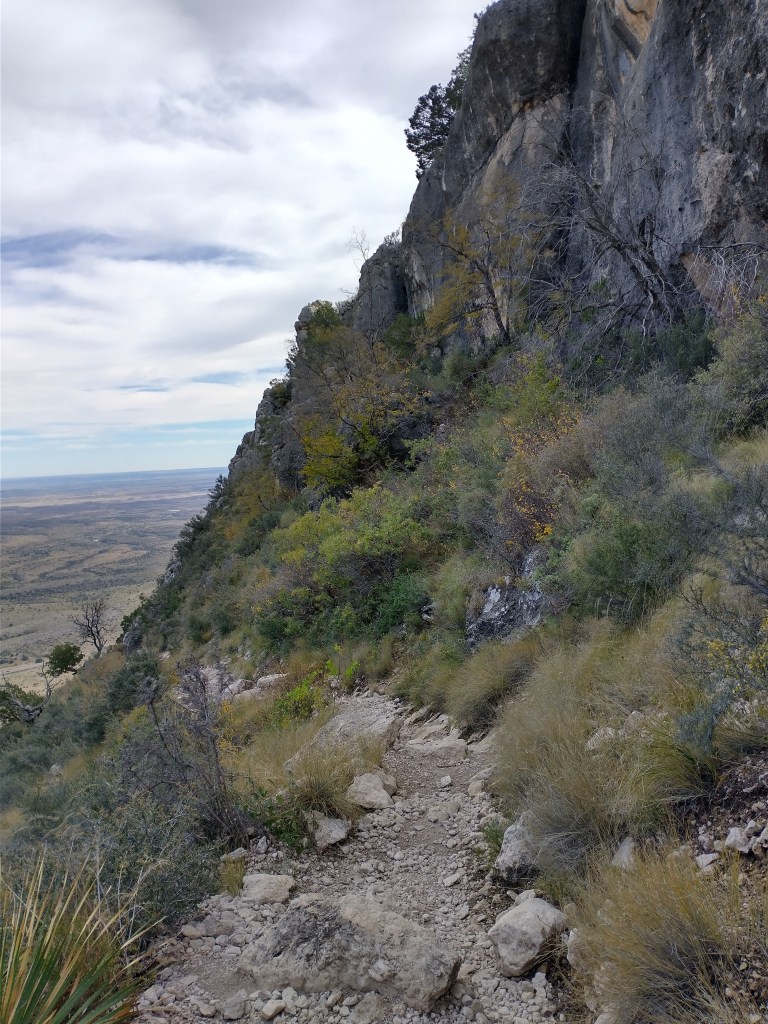
I stopped after about twenty minutes to take some pictures. The cold mountainside looked like something out of another world, all white stone, green brush, and cactus, with a sheer wall of rock on one side and a sharp drop down to the flatlands below on the other. The thing that really threw me though was the riverbed.
White, dry riverbed stretched across of the face of the earth far below like pale veins against the scrubland. The empty channels wrote over the land, scarring the surface of the struggling brush and rocks. It looked like wounds. Like tear-streaks. Like grief.
I stopped to look for several minutes, until it got too cold to stand still.
I turned back to the trail filled with a sudden and strange sadness. What story could be written about how what we love changes us beyond comprehension, long after it leaves us?
But the wind blew me on, and upwards.
A warning…
Finally, after the first mile and a half or so of steep incline, the stairs dropped into long horizontal slopes crisscrossing ever-upwards at a much gentler incline. This would have been comforting, had I not run into a group descending at about this point who smiled and waved, then shared a warning.
“Be careful up there,” said a woman in a pink jacket, two climbing poles clutched in her hands, “The wind really picks up after this bend.”
The wind picks up? The wind already buffeted us along the narrow stretch of trail, with a steep grade on one side. More than that? I thought she must be exaggerating.
I pulled myself off the trail towards the rocks, and let the descending group pass, as well as a small group behind me—a couple, trailed by a tall red-headed man in a face scarf. He looked much cozier than I felt.
“Oh boy,” I said aloud to the pink woman, ever laconic and unable to have a civil conversation with a stranger.
“Enjoy!” she chirped, and led her group away down the path I’d just come up.
One hand on the white sheer rock face that stretched up above my head still, I wondered about that word choice. Enjoy. Sincere? Sinister? She certainly seemed better equipped than I was, in my oversized flannel, jeans, and Henley. I had a backpack with water and some snacks, but nothing like the Patagonia-clad group that had just passed.
The wind picks up
Whatever, I thought. I grew up doing this. I was practically raised in state parks, there’s nothing Texas has I can’t handle—
And then I turned the corner.
Wind hit me so hard I nearly lost my footing, my whole body picked up like a kite and jolted in a brief moment of nearly-airborne weightlessness. I stumbled, grabbling at the rocks. Adrenaline shot through me.
Oh, that’s how it’s going to be?
Step by step, bent low in a squat, one hand running along the side of the mountain, I made my way up the sheer face of rock. The wind buffeted me with every step, as if this hunk of west Texas rock were a dirty mixing bowl—and god had a spatula. Every gust felt like it came closer and closer to simply scraping me off and tossing me into the gulch below.
I picked my way forward on all fours like Gollum on some of the steeper sections, relying on speed and power to carry me against the wind. I passed few others on this section of the trail, which was probably for the best in terms of acting like a weirdo in public. I did pass the red-headed man again, and I noticed, with all the unkind suspicion of a woman hiking alone, that he walked now by himself.
We nodded as I passed him again in a close stretch of trail, and I hurried ahead. Long strides took me up the next bend quickly—and back into the merciless wind.
How long would this wind last? I wondered. The trail switched back and forth, cutting into the mountainside both with and against the wind. Sometimes less, sometimes more—but always there, always relentless.
Would this be my next six miles? I didn’t know, but I went on ahead anyway. Only way out is through. Head down, teeth clenched, one step at time, I picked my way forward.
Making a friend
After about twenty more minutes of biting wind, I took some cover to have a sip of water and evaluate my life choices. I also started to do the math on meals, and realized just how long I’d need to go before eating again. An 8 am breakfast would have to fuel all 8.4 miles and the drive back to town that night, too—the few handfuls of almonds I had on hand aside.
Somehow, food really hadn’t occurred to me as part of this endeavor. A detail easily overlooked in the face of such a momentous challenge. (Author’s note: This is stupid. Do not do this.)
Oh well. The faster I climbed, the faster I’d see the ground again.
I continued to climb, slower as I munched, now through a short stretch of trail covered by trees on each side. Around this point, I noticed that the red-haired man had caught up with me again after my break, and trailed only a few yards behind me.
By the time he reached me, the awkwardness of having passed each other several times wordlessly needed breaking—unless this was the opening to a horror movie, in which case I was about to become either a true crime case or a murderer.
Thankfully, he said hi, implying that he neither intended to wear my skin or leave me to start the conversation myself.
Turned out, the man was from Austin, although on the other side of the city. Mid-40s, he’d gotten separated from his hiking partner as well—another casualty of the biting wind. He told me his name, and said he’d been hiking most of his life, but never been out to the mountain before. He told me about raising his kids basically on Enchanted Rock, and recommended a few places in CenTex for the still fairly recent transplant (me). I still need to make it out to Balcones Canyonlands sometime.
We walked together for about 15 minutes or so, making short conversation between wind gusts about Austin, different destinations in Texas, and local breweries.
Finally, he told me I could pull ahead of him—either because I walk way too fast to keep up with, or because he didn’t want to seem creepy. Either way, I appreciated it.
“See you at the top,” he said.
“See you there.”
I hurried on ahead, swift steps on sharp rocks, eager to cut my teeth on whatever challenges the mountain still held in store.
The third mile: God is angry
On and on I climbed. The wind didn’t stop, but I found a cadence on the trail. My new friend left behind, I was alone to face the trials of the wild, and words bubbled up out of me to meet it.
Poetry is not something I make a conscious effort to create half the time. Words scrabble out of my brain-meat like worms during a rain, an inconvenient natural phenomenon. I can either catch them and put them somewhere they will thrive and reirrigate the soil, or not.
Here, no different, I felt the sound and shape of a poem. So, on the white rocks, clinging to the steep side of the mountain between gusts, I wrote to pass the time.
I began, on a winter day, to climb the face of grief itself.
At some point, the trail dipped from the first false peak, down again before hitting the ascension proper. A small wooden bridge spanned the space between peaks, creaking in the wind. The drop down made my stomach swoop. Far below, even the trees themselves seemed small.
Hour after hour, the ground drops away to white-veined earth below.
I passed other hikers, descending in heavier coats, holding hiking poles. Each group cheered me on with glowing enthusiasm, a perplexing sort of cheer in this weather. I smiled back, holding my sunglasses to my face in the moment of raising my head so they didn’t fly off my face.
The wind howls like god.
The words spilled out, and I repeated them to myself in no particular order. Scraps of nonsense, recited in variance each time, as I edited, occasionally jotting down a line or two. Arguably one of the worst environments for artistic creation, but when needs must, I guess.
The trees broke again, and the wind picked up—worse this time, screaming, whipping the ripped skin on my face. It felt like I shouldn’t be there, on that mountainside. Yet all these people coming down had done it, and I’d driven eight hours west the day before for this purpose, to accomplish this.
There was no way in hell I wasn’t finishing it.
The fourth mile: The wheat from the chaff
The trail continued upwards, switchback after switchback. The trees got ragged and small, but hung on even at that height, occasionally stopping the wind for a few minutes at a time before the trail would change angle again, and the cover broke. I’d shove my sunglasses back into position, and trudge on.
By the umpteenth steep switch back and forth, I’d begun singing Kate Bush’s Running Up That Hill in my head, with the words slightly changed. We’re not running up that hill, oh we are not running up that hill… One foot after the other.
Finally, I broke out of the trees for the last time. The wind whipped against the rocks, making the last few shelves of trail incredibly precarious. Sheer drop on one side, tall white rock face with few handholds on the other, and unsteady footing in between. The trail didn’t wind upwards so much as it disappeared onto a shelf of slanted white rock that really seemed too smooth for walking on in that weather.
Yet half a dozen of us or more crept along, inching from handhold to handhold. Battered by the wind, hikers going down encouraged the few of us who held steady on the rocks.
“You’re almost there!”
I really feel like someone in charge should have been questioning the safety of all of this, given the drop into the valley below just one good gust of wind away.
But I sure wasn’t going to.
The peak loomed just ahead, and I hadn’t come this far to turn back now.
Not all of us felt this way. On a tight turn where the path forked, one option going up a steep set of boulders, and the other fork narrowing even tighter around a hairpin turn with a sharp drop below, several hikers took turns inching around the bend.
The man behind me looked nervous—and over equipped—and unsure of the path. As he turned, scrutinizing each option, a gust of wind lifted his beanie right off his head and sent it flying into the brush far above us. Another gust lifted it again a few seconds later, and it took flight for real, into the smaller valley on the other side.
“That’s it,” said the unfortunate beanie owner. “It’s going to be a miserable climb down.”
He turned around, and headed down the mountain. On some level I understood. Miserable climb or not, it seemed a shame to lose your hat and not even have a summit to show for it.
I took the path over the boulders, opting for the harder climb to stay away from the sheer edges, and pressed on. I was thankful, at this point, for my thin shoes. For all I felt every single rock, I trusted my footing and knew where my weight was. When a rock began to shift, I knew it quickly—a fact which kept me safer from slipping, I think, than many of the bigger-booted folks alongside.
Reaching the summit
The mountain’s summit surprised me. I rounded a frigid bend, between two slabs of white rock blessedly waist-high, and suddenly four or five hikers all sitting around together cheered.
I blinked at them, confused.
“You did it!” said a middle-aged man in sunglasses. “Congratulations!”
Oh, I thought, looking around. Oh shit, I’m here. I made it.
A metal pyramid marked the top of the highest pile of rocks on this part of the trail—the highest pile of rocks in the state, actually.
“Do you have anyone to take your picture?”
I handed over my phone to a complete stranger, and obediently stumbled up to the metal pyramid to cautions of be careful from the other hikers. I stood, and smiled, for a brief moment while trying desperately to keep my balance against the wind. I looked it up later—the winds at the peak that day got up to 60mph.
Pictures secured, I thanked my new friends and sat down in a crevice of the rocks to look out at the scenery.
From this angle, even Texas was lovely. I could see in every direction, brown and blue and green stretching out flat to the beautiful horizon.
I sat there as long as I could stand the cold, and then began my trek back down.
The descent
The road back to the car was long. It took nearly as long to descend as it did to ascend. I took it slow in the grey, cold hours down, favoring my bruised feet. The thin, zero-drop shoes were not a bad decision, exactly, but their use came with a price. By the time I got to the last mile or so, I could feel every rock against my abused soles.
Somewhere in the descent, I ran into the man who took my picture again, and we chatted briefly. He asked me my name, and said, “I always like to know the names of the people I take pictures of out in these places. So, if I come back 20 years from now, I can say, ‘I took a picture of a girl named Abigail here.’”
He told me his name, too. In the cold and hurry of those last few hours, I forgot it. I regret that.
Finally, after another two hours, I made it back to the car, right at dusk. I finished up at five hours on the dot—a quick time, compared to the estimated 6-8 hours listed on the park board for the climb.
The park rangers weren’t in sight. Though I imagine that if the sandwich-wielding ranger had been there, he might have had something equally cryptic to share on the way out. As it was, I reached the near-empty parking lot just as the sun went down, and rejoined my sibling. They’d spent their day enjoying the other sights of the park, and generally not taking their life in their hands. And enjoyed it.
Together, we took up the banner of the second most important quest of the day: Food. It’s hard to beat unlimited Taco Bell after surviving an 8.4-mile climb in the cold.
A few takeaways
Now that nearly two months have passed since this climb—I did this in November, 2022—I’ve spent quite a bit of time thinking about why I did that. And, more so, why I immediately started planning another 49 variations on the same trip.
Why 49? Well, there’s 50 states, and I learned about the hobby of highpointing. Texas is the beginning, but it will not be the end. One down, 49 to go. (Denali, I see you.) I plan to reach the highest point in each of the fifty states. Because I can’t say no to a challenge, or a checklist.
I take great joy in doing things that are difficult. It’s not that I love pain, so much as that I know my tolerances and enjoy pushing my own limits to see what I can achieve. Climbing this mountain fed some animal hunger inside me to go fight nature and win.
There’s a quote by Benjamin Bush that I love where he discusses the damage done to his own body over the years. When undergoing knee surgery for injuries sustained over decades, he wonders, “how anyone else’s knees were any better. Hadn’t they also gone forth to wear themselves against the world?”. And I do think that really perfectly summarizes my desire to do what is insane, what is difficult, what others do not. To wear oneself against the world.